

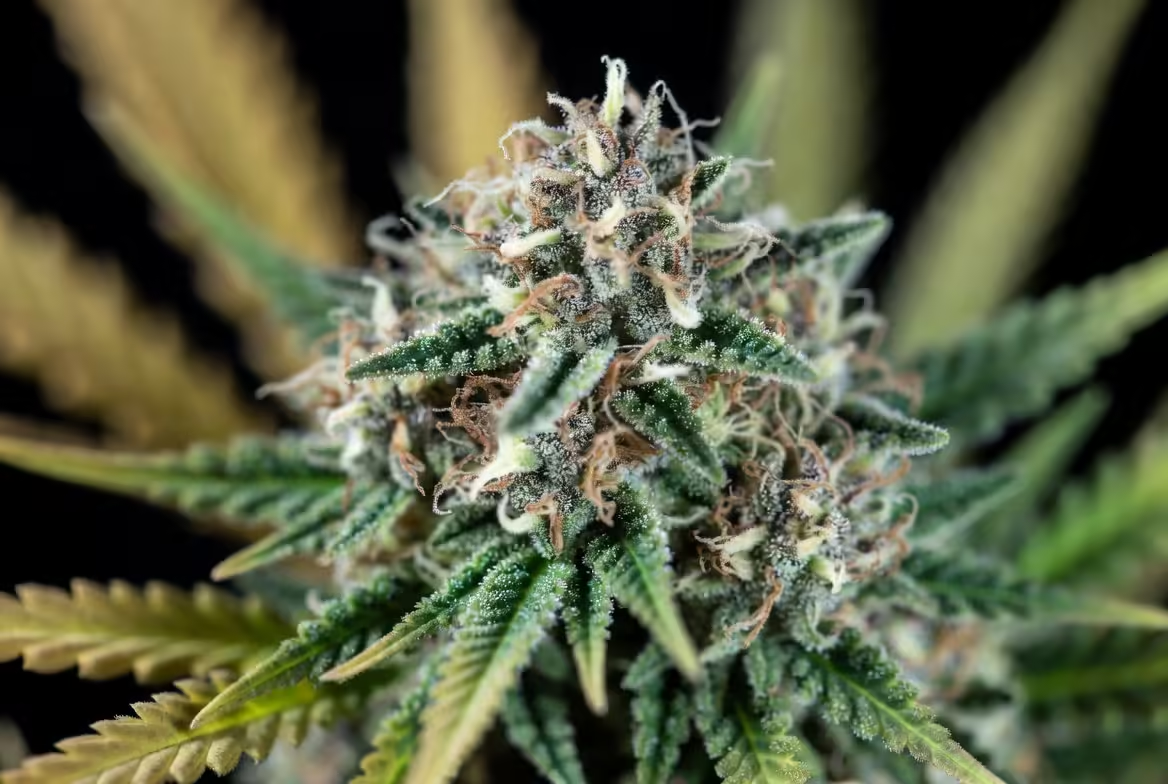
When examining cannabis flower, many people notice a sparkling, frosty layer covering the buds. These tiny structures are called Trichomes. They play a central role in the plant’s chemical makeup and serve as one of the most visible signs of flower quality. Trichomes appear as fine, crystal-like glands that form on the surface of the buds, leaves, and stems as the plant matures.
Understanding Trichomes helps visitors evaluate cannabis products more effectively when visiting licensed dispensaries in Chiang Mai. The density, color, and condition of Trichomes can offer useful visual clues about how the flower was grown and handled. By learning what healthy Trichomes look like and why they matter, customers can approach product selection with greater confidence and clearer expectations.
Trichomes are small, hair-like or mushroom-shaped glands that grow on the surface of cannabis leaves and flowers. Under magnification, they often resemble tiny stalks with a rounded head that can appear clear, cloudy, or amber depending on maturity. These microscopic structures are where the plant produces and stores many of its key compounds, making Trichomes central to both the appearance and chemical profile of the flower.
There are different types of Trichomes on the cannabis plant, including bulbous, capitate-sessile, and capitate-stalked varieties. The most significant for resin production are the capitate-stalked Trichomes. These larger structures stand higher above the surface and create the frosty, crystalline appearance commonly associated with high-quality flower. When Trichomes are abundant, intact, and evenly distributed, they contribute to the sparkling look that many people notice when closely examining cannabis buds at licensed dispensaries. Understanding the role and appearance of Trichomes provides a useful foundation for evaluating flower more carefully.
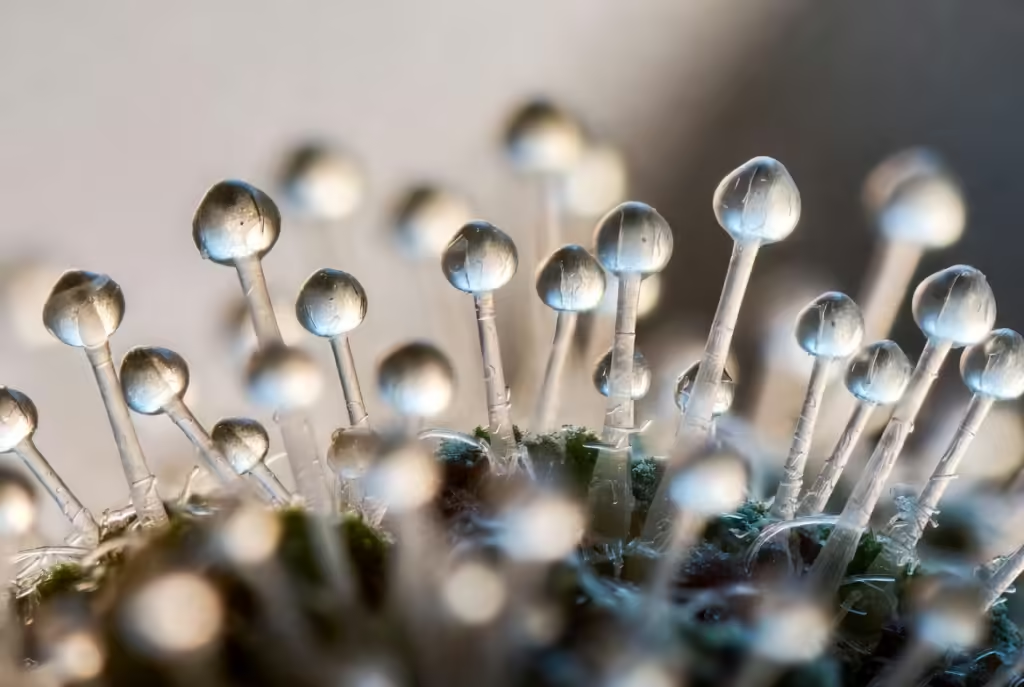
Trichomes function as the plant’s resin factories. They produce and store many of the compounds found in cannabis, including cannabinoids and terpenes, within their glandular heads. This is why the density and appearance of Trichomes are closely linked to the overall character of the flower.
As the plant matures, Trichomes develop and gradually fill with these compounds. Early in the flowering stage they often appear clear, later becoming cloudy or amber as the plant reaches peak maturity. The density and condition of Trichomes on a bud provide useful information about how the plant was grown and when it was harvested. Abundant, intact, and well-developed Trichomes are generally considered a hallmark of careful cultivation and proper timing. When Trichomes are sparse, damaged, or overly degraded, it can suggest less ideal growing or handling conditions. Observing these details helps visitors better understand what they are looking at when examining flower at licensed dispensaries.
The visible frost on cannabis buds comes directly from Trichomes. Higher Trichome density generally corresponds to greater resin production, which is why a sparkling, crystalline appearance is often associated with more carefully cultivated flower. When Trichomes are plentiful and evenly distributed, they create the distinctive frosty look that many people notice upon close inspection.
Key visual factors include:
In Thailand’s licensed market, these characteristics help distinguish between different grades of flower available at dispensaries. Learning to observe Trichomes more carefully gives visitors a practical way to evaluate quality beyond strain names or basic descriptions, and supports more informed comparisons when selecting products.
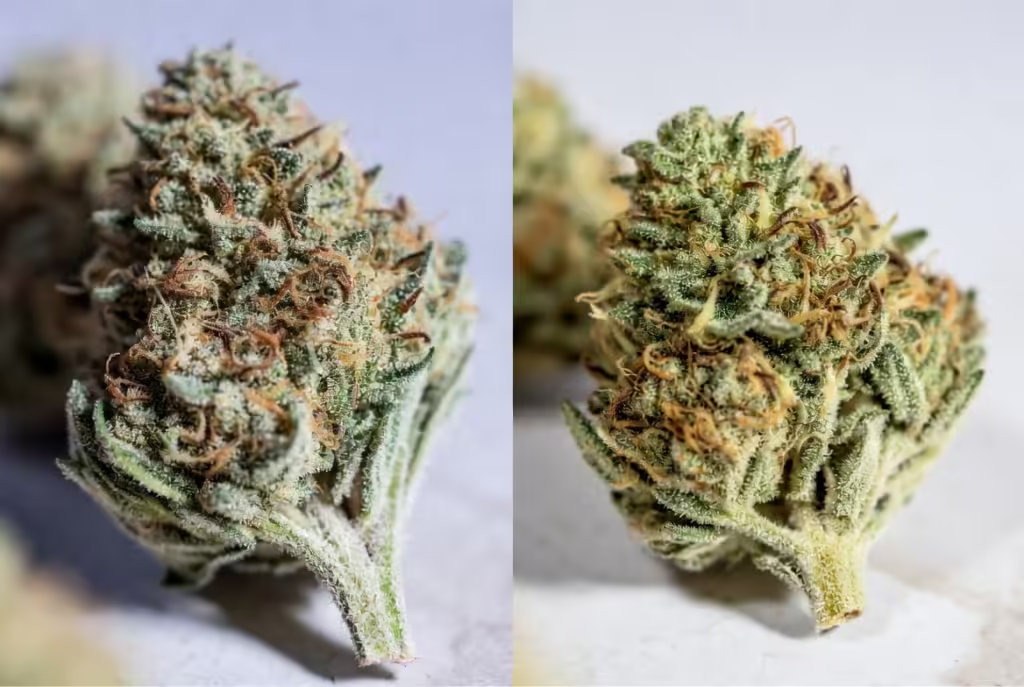
Many licensed dispensaries in Chiang Mai provide good lighting and, in some cases, allow customers to examine flower closely. Using a small magnifying tool (sometimes called a loupe or jeweler’s loupe) makes Trichomes much easier to see in detail. Without magnification, the fine structure of Trichomes can be difficult to assess accurately, so a closer look often reveals important differences in density and condition.
When evaluating flower, look for:
These visual details help indicate how well the flower was cultivated and handled. Staff at licensed locations can often explain the growing and curing practices that influence Trichome development, including factors such as harvest timing and post-harvest care. Educational resources from dispensaries such as Haze Buds in Chiang Mai frequently cover these plant characteristics to support informed evaluation, giving visitors practical ways to better understand what healthy, well-developed Trichomes look like.

Trichomes are the primary site where both cannabinoids and terpenes are produced and stored. This connection means that Trichome-rich flower often carries a more pronounced aromatic profile as well, since terpenes are responsible for much of the scent and flavor character. When Trichomes are abundant and well-developed, the flower tends to reflect greater overall chemical richness.
The combination of cannabinoids and terpenes created within Trichomes contributes to the overall chemical complexity of the flower. Because these compounds are concentrated inside the glandular heads, the condition and density of Trichomes can offer useful visual clues about the product’s potential profile. This is why Trichome observation remains a practical tool for assessing quality alongside laboratory test results provided by licensed operators. While lab reports give precise measurements, looking at Trichomes helps visitors form a more complete picture when evaluating flower in person at dispensaries.
Trichomes are the microscopic resin glands responsible for much of the chemical profile found in cannabis flower. Their density, condition, and appearance offer valuable clues about cultivation quality and resin content.
For visitors exploring licensed dispensaries in Chiang Mai, understanding these structures provides a useful framework for evaluating flower. Many reputable shops support this learning process through transparent product information and educational guidance.
What are trichomes on cannabis? Trichomes are tiny, resin-producing glands that grow on cannabis flowers and leaves. They are responsible for creating the frosty appearance on high-quality buds and contain many of the plant’s key compounds.
Why do trichomes matter for cannabis quality? Trichomes indicate the level of resin production. Flower with abundant, well-developed trichomes generally reflects careful growing practices and higher resin content, which are important factors in quality assessment.
Can I see trichomes without special equipment? Many trichomes are visible to the naked eye as a sparkling layer, especially under good lighting. A small magnifying tool makes it easier to observe their density and condition in detail.
Do all cannabis flowers have the same number of trichomes? No. Trichome density varies depending on genetics, growing conditions, harvest timing, and handling. Licensed dispensaries in Chiang Mai often carry flower with different levels of trichome development.
How do trichomes relate to terpenes? Trichomes are the main structures where terpenes are produced and stored. This is why flower with rich trichome coverage often displays stronger and more complex aromas.