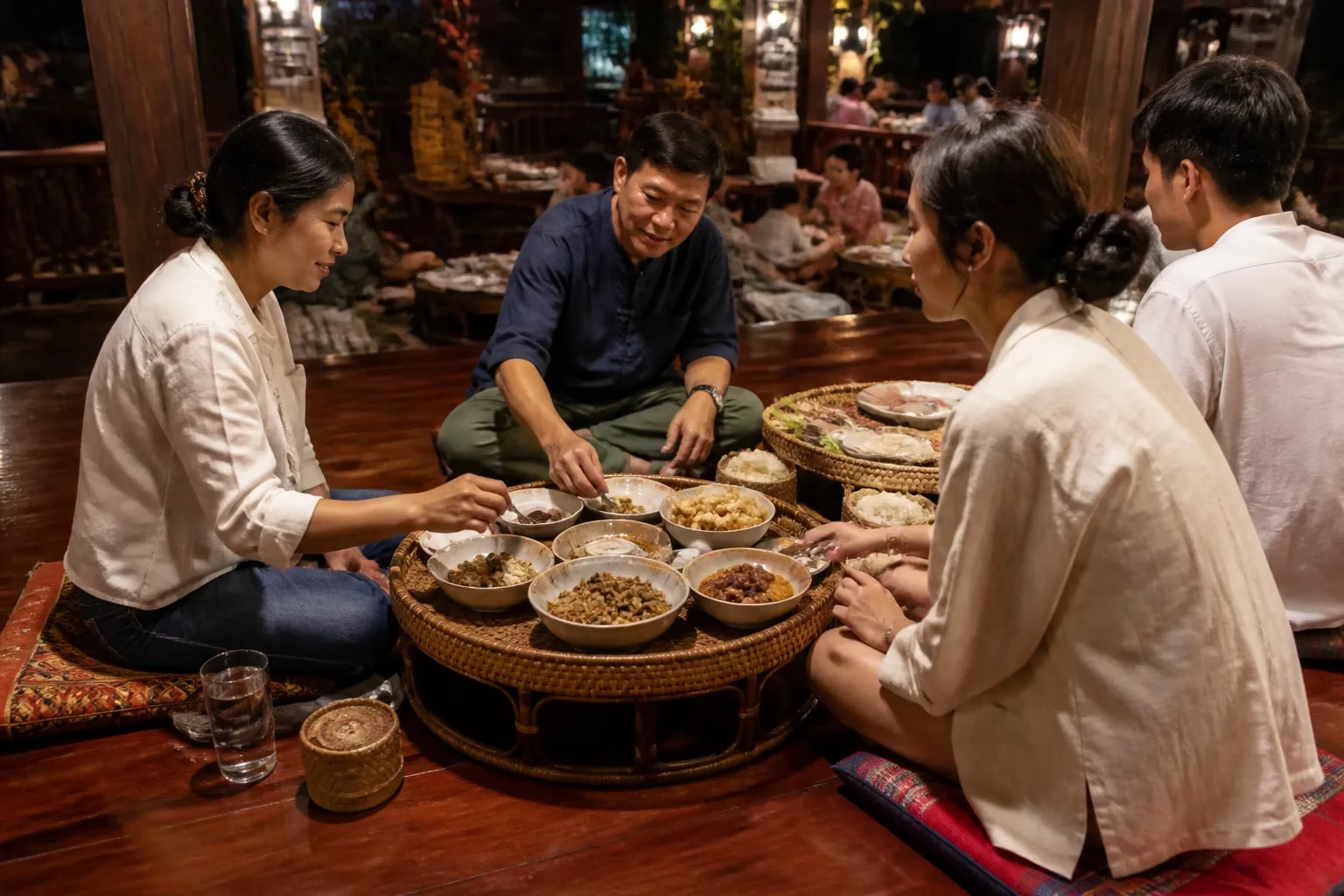

When friends visit Chiang Mai for the first time and ask for one evening that shows off northern Thai food and culture together, our team often suggests the same thing: a khantoke dinner. You sit on the floor around a low tray, share small bowls of Lanna dishes, eat sticky rice with your fingers and watch traditional dances while you eat.
It’s touristy in places, but done well it’s a relaxed, generous evening and a gentle introduction to food you might not order on your own. Here’s what to expect, what’s on the tray and how to pick an evening you’ll enjoy.
The name describes the table itself. A khan is a bowl and a toke is a low, round pedestal tray, traditionally made from wood or woven rattan. In Lanna (northern Thai) homes, food was served on these trays for guests to share while sitting on mats on the floor.
Over time the khantoke became associated with hospitality and celebrations: weddings, temple fairs, house-warmings and welcoming important visitors. Today’s khantoke dinners for visitors grew out of that tradition, adding a stage show of Lanna music and dance.
Every venue has its own menu, but most khantoke trays are built from classic northern dishes. You’ll often see:
Many venues will happily adjust for vegetarians if you ask when booking. If you’d like to understand these dishes before you go, our guide to authentic Lanna food beyond khao soi is a good primer.
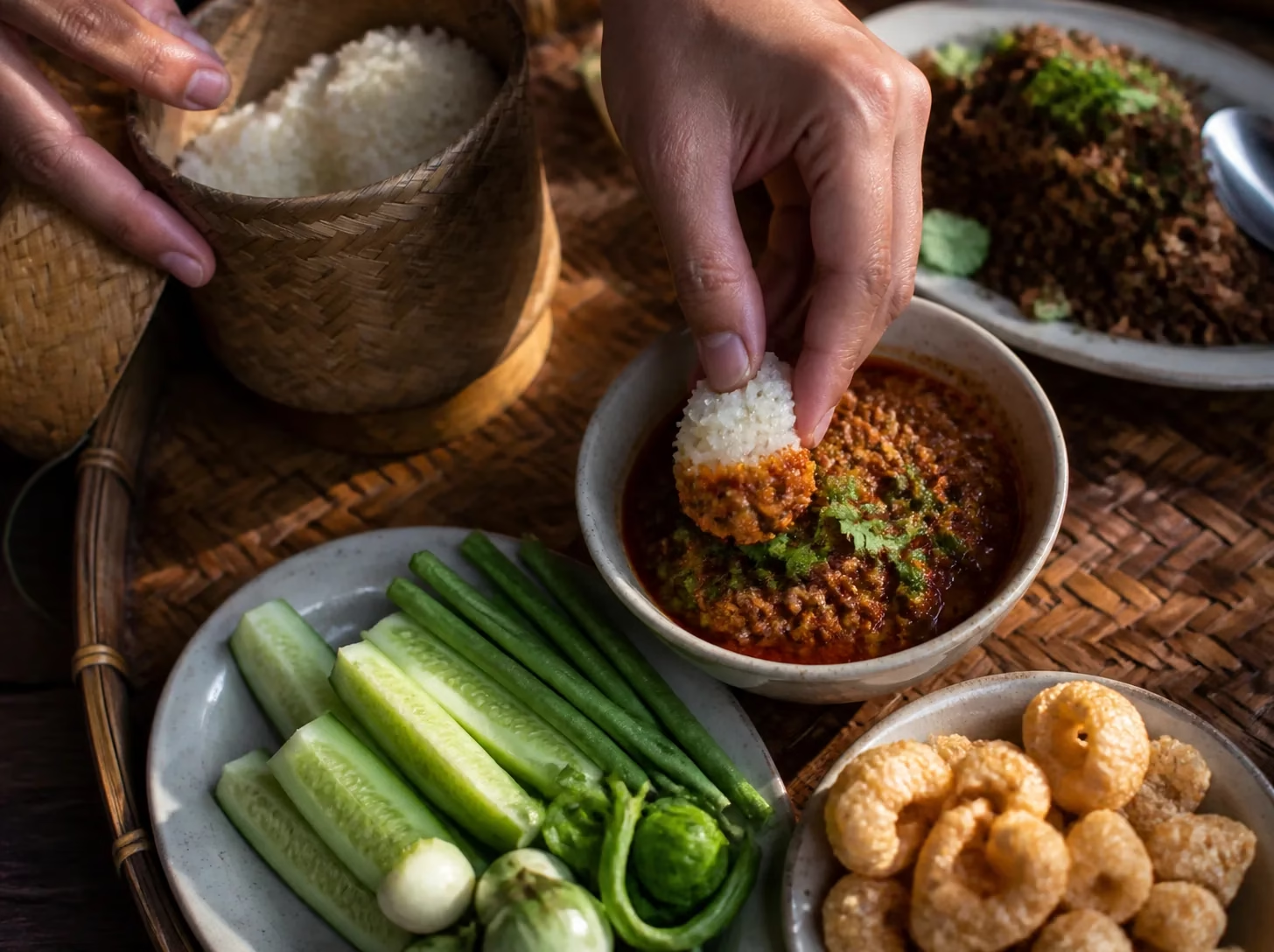
Khantoke is meant to be eaten slowly and shared. A few simple habits help:
Most khantoke dinners include a programme of traditional performances on a small stage. Two you’re likely to see are the graceful fon leb (fingernail dance), where dancers wear long brass nail extensions, and the fon tian (candle dance), performed with small candles after dark. Some shows also include sword dances, drum performances or dances from hill-tribe communities.
Performances usually run while you eat, so arrive on time if the show matters to you.
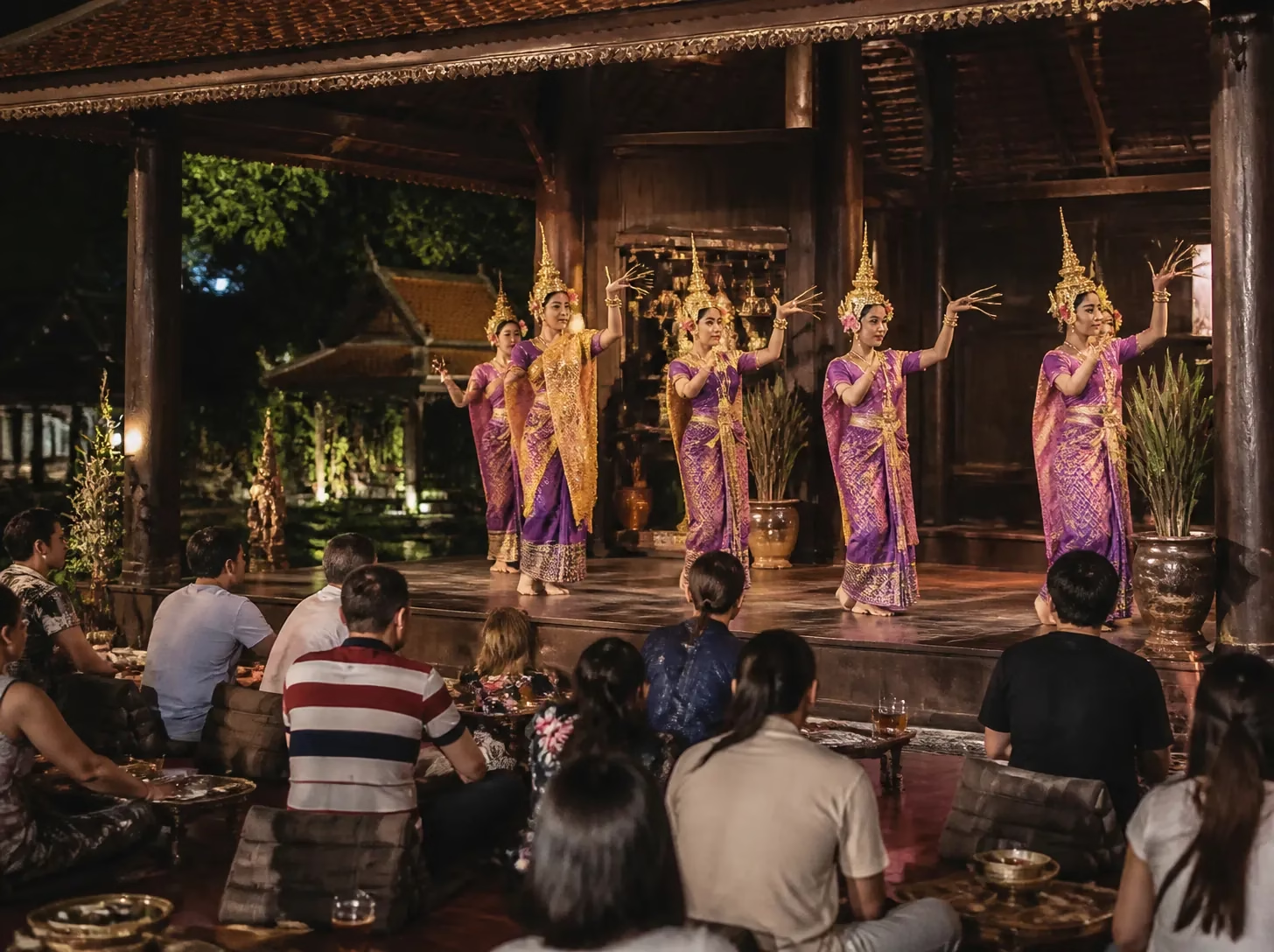
Khantoke dinners range from large cultural centres that seat busloads of visitors to smaller restaurants and hotel dinners. There’s no single “best” option; it depends on what you want from the evening. A few things to consider:
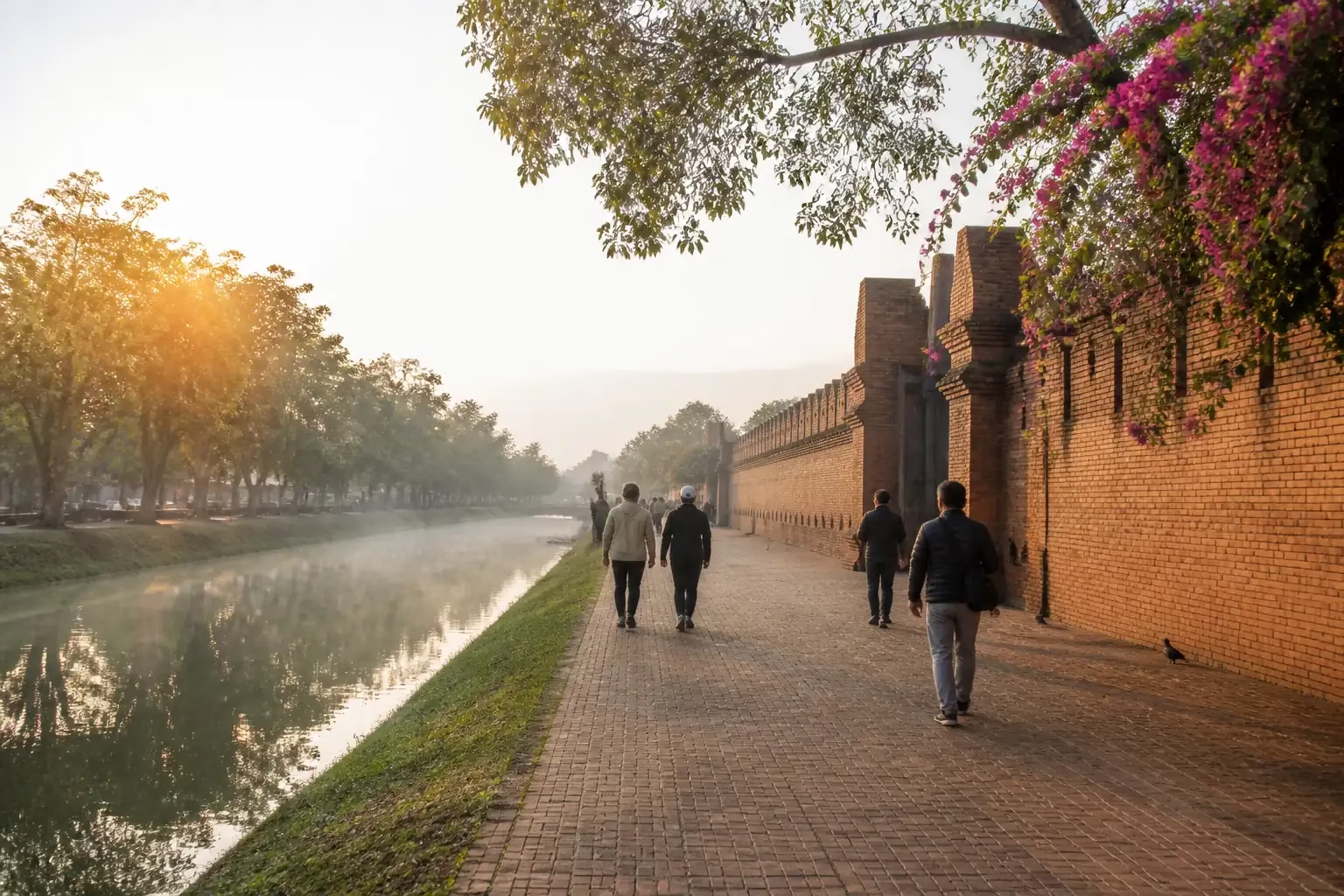
Khantoke dinners usually start in the early evening, which leaves time to stroll beforehand. A slow walk around the moat at sunset is a nice warm-up; we’ve mapped one in our moat loop at dusk guide.
Afterwards, keep it calm. The meal is filling and the show ends at a sensible hour, so it’s an easy night to wind down early. If you’re looking for more ideas, our calm evening routine without alcohol has a few of the team’s favourites.
A khantoke dinner won’t replace exploring Chiang Mai’s markets and noodle stalls, but as a single evening of northern food, music and hospitality, it’s hard to beat.