
Chiang Mai is a city of infinite choices. You wake up, peel back the curtains, and the question isn’t “what is there to do?” but rather “what mood am I in?”
For the average tourist, the itinerary is set in stone before the plane even lands. They have the checklist: The Night Bazaar, Doi Suthep Temple, and, inevitably, the “Grand Canyon” of Chiang Mai (Hang Dong). If you search “swimming in Chiang Mai” on Google, the Grand Canyon dominates the results. It has the marketing budget, the inflatable obstacle courses, and the cliff jumping platforms.
But let’s be real for a second. If you are part of the Haze Buds community—if you appreciate a slower pace, a deeper connection with your surroundings, and perhaps have just enjoyed a session with some of our finest locally-grown sativa—the Grand Canyon can be a sensory nightmare. It is loud. It is scorching hot with very little shade. It is crowded with backpackers screaming as they jump off cliffs and children fighting over inflatable floats. It is an adrenaline park, not a sanctuary.
Sometimes, you don’t want adrenaline. You want immersion. You want the kind of quiet that rings in your ears. You want cool air, green canopies, and the sound of water hitting rock, not the sound of EDM blasting from a Bluetooth speaker.
This is why we are telling you to skip the Grand Canyon this time. Instead, turn your handlebars toward the mountain and discover the quietest, most accessible sanctuary in the city: Monthathan Waterfall.
We see it all the time at our shops. Customers come in, pick up some top-tier flowers, and ask, “Where should we go to chill?” When they mention the Grand Canyon, we usually hesitate.
Don’t get us wrong; the Grand Canyon has its place. If you want to drink a beer, get a tan, and meet a hundred other travelers, it’s great. But in the context of a “high” experience—where your senses are heightened, and you are attuned to the subtleties of light, sound, and texture—the Grand Canyon is often too much. The heat in that quarry can be unforgiving. The red dirt reflects the sun, baking you from all angles.
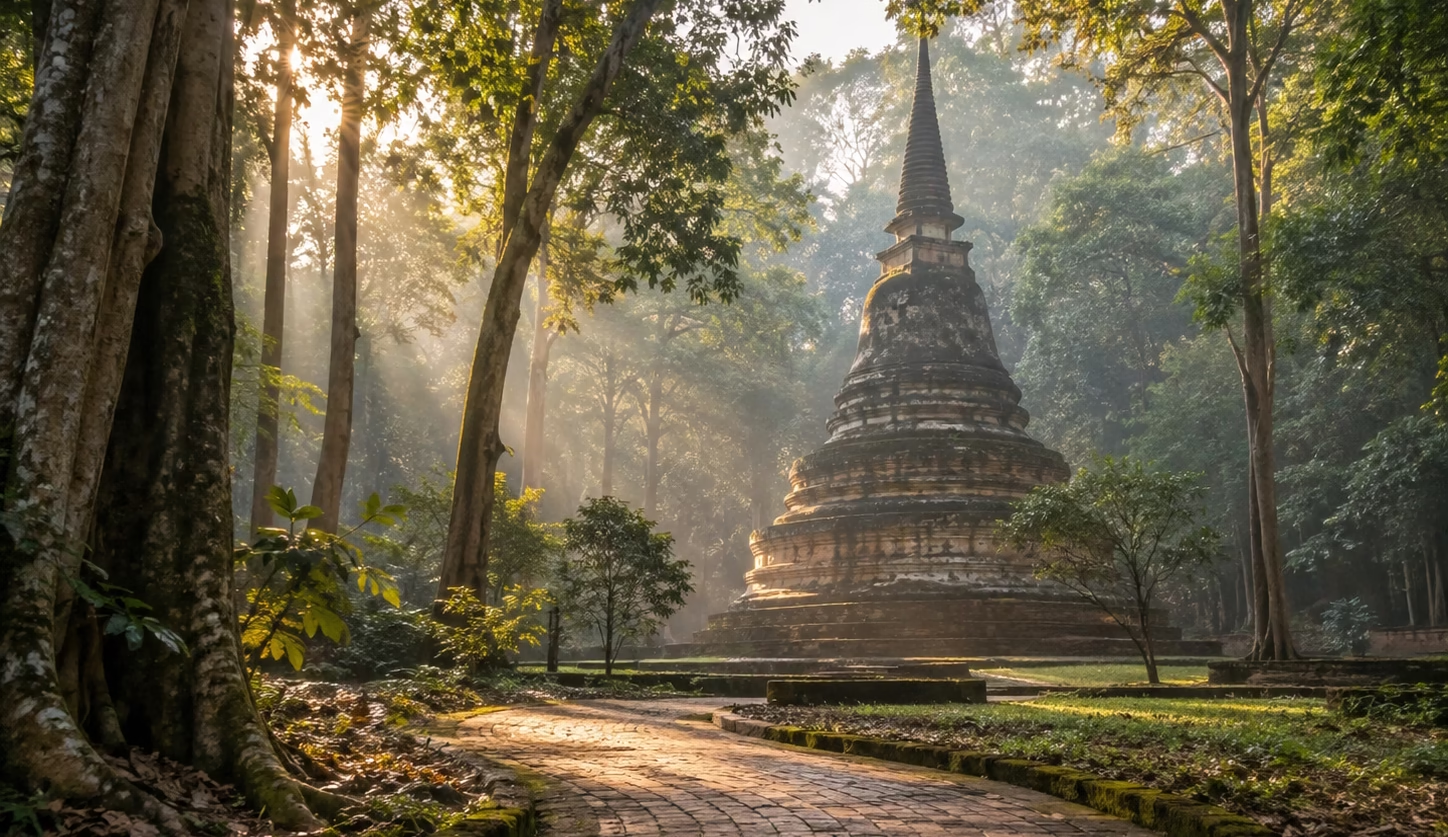
The true Chiang Mai experience, the one that locals cherish, is found in the folds of the mountains. It is found in the “Green Lungs” of Doi Suthep-Pui National Park. And while everyone else is driving 45 minutes south to Hang Dong to bake in the sun, you could be driving 20 minutes west into the cool embrace of the jungle.
Monthathan Waterfall (Namtok Monthathan) is strange because it isn’t hidden in the traditional sense. It is right there. It sits on the main road up to Doi Suthep, the same road thousands of tourists take every single day to see the temple. Yet, 99% of them drive right past the turn-off.
Why? Because it’s not flashy. It doesn’t have a water park attached to it. It requires a small National Park fee. This filter is perfect because it means the only people you find at Monthathan are people who want to be in nature.
It is a nine-tiered waterfall that cascades down the granite slopes of Doi Suthep. It is ancient, serene, and, most importantly, shaded.
We asked Gato, one of our long-time team members and a certified nature enthusiast, why he chooses Monthathan over the more famous spots like Huay Tung Tao or the Grand Canyon.
“For me, Monthathan is the ultimate reset button,” Gato explains. “People think you have to drive two hours to Samoeng or Mae Rim to get real nature. But Monthathan is literally 15 minutes from the Mayan Mall. It’s a quick escape. I can finish a shift, ride up there, smoke a little bit, listen to the water, and be back in the city for dinner. You don’t need a whole day. You just need an hour.”
That phrase—“a quick escape”—is the key. In a city that is becoming increasingly busy with traffic and construction, having a sanctuary that is accessible within minutes is a luxury. Gato notes that the transition is instant. You go from the concrete heat of Huay Kaew Road to the misty, fern-covered microclimate of the waterfall in the blink of an eye.
At Haze Buds, we talk a lot about “Set and Setting.” The “Set” is your mindset (which we help with), and the “Setting” is where you are.
Monthathan is, arguably, the perfect setting for a post-dispensary adventure. Let’s break down the sensory details that make this spot superior to the Grand Canyon for our specific clientele.
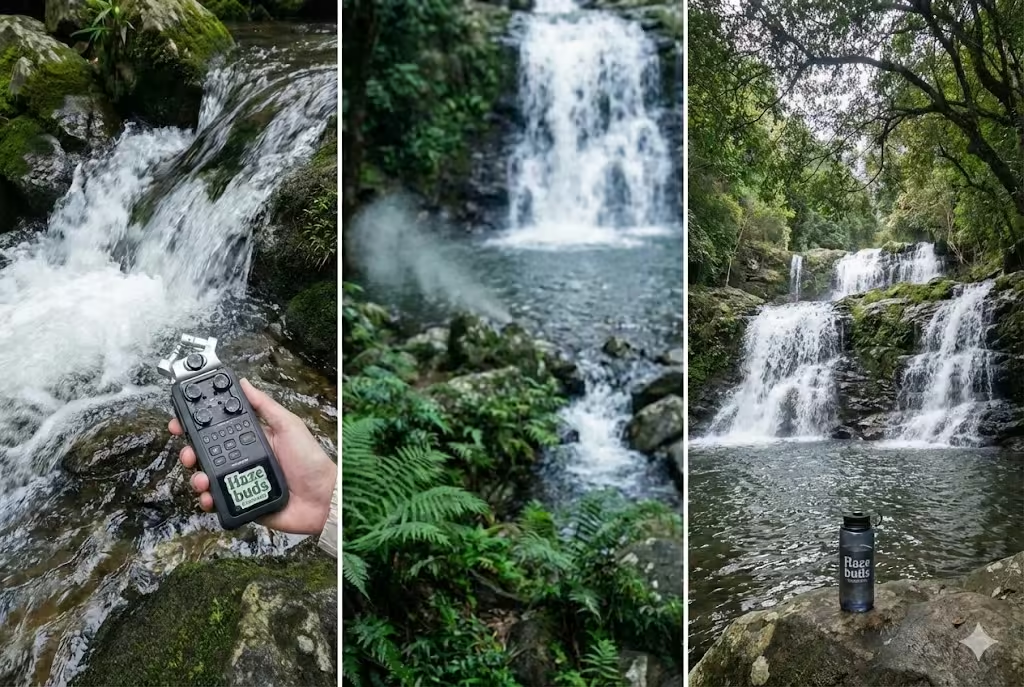
At the Grand Canyon, the soundtrack is splashing, yelling, and often loud music. At Monthathan, the soundscape is “Green Noise.” It is the white noise of nature. The rush of the water crashing down the rocks creates a natural sound barrier that blocks out the rest of the world. When you are in a heightened state, this sound is hypnotic. It allows you to meditate, to think, or to just stop thinking altogether. You can hear the wind moving through the bamboo groves. You can hear the distinct calls of the Drongos and Bulbuls (local birds). It is high-definition audio for your soul.
Chiang Mai is hot. We all know this. The Grand Canyon is an exposed quarry; there is nowhere to hide from the sun. Monthathan is located at a slightly higher elevation and is densely canopied by Dipterocarp forest. As soon as you pay your entry fee and drive past the checkpoint, you feel it. The temperature drops by about 3 to 5 degrees Celsius. The air feels wetter, cleaner. It smells of damp earth, moss, and ozone. It’s a natural air conditioner.
The Grand Canyon is stark—red earth and blue water. Monthathan is a study in texture. You have the rough grey granite boulders, the velvet green moss, the intricate patterns of the ferns, and the towering Yang Na trees. For those with an artistic eye, or those currently enjoying the visual enhancement of a good strain, the play of light filtering through the leaves (what the Japanese call Komorebi) is mesmerizing. The water isn’t a stagnant pool; it’s living, moving, foaming, and flowing.
One of the reasons people avoid “nature” trips is the effort. Nobody wants to hike for three hours in 35-degree heat just to see a trickle of water.
Monthathan strikes the perfect balance.
The Lower Tier: You can park your motorbike or car and walk literally 2 minutes to the first main basin. It is accessible. You can sit on a rock, dip your feet in the ice-cold water, and chill without breaking a sweat.
The Nature Trail: If you are feeling adventurous, there is a nature trail that leads up to the higher tiers. It’s not an arduous climb. It’s a well-maintained path with wooden bridges and steps. The hike to the second main tier takes about 10-15 minutes. It gets your heart rate up just enough to make you feel alive, but not enough to exhaust you.
The higher you go, the fewer people you see. It is entirely possible to hike to the third tier on a Tuesday afternoon and be the only person there. That kind of solitude is impossible at the Grand Canyon.
If we have convinced you to ditch the inflatable water park for the jungle, here is how you execute the perfect Monthathan trip.
Before you go up the mountain, you need supplies.
Hydration: Bring water. Cold water. There is a small coffee shop at the entrance, but it’s better to be prepared.
Snacks: The “munchies” will hit. Unlike the Grand Canyon, there are no burger stands in the national park. Stop by a 7-Eleven or a local market and grab some fruit (fresh pineapple or watermelon is god-tier after a hike) and maybe some sticky rice and grilled pork.
The Enhancement: Visit Haze Buds. For a nature trip like this, we recommend asking our budtenders for something “uplifting” and “sensory.” You don’t want a heavy indica that will glue you to the car seat. You want a hybrid or sativa that will make the colors pop and the walk feel like floating. (Tell the staff you are going to Monthathan; they will know exactly what to recommend).
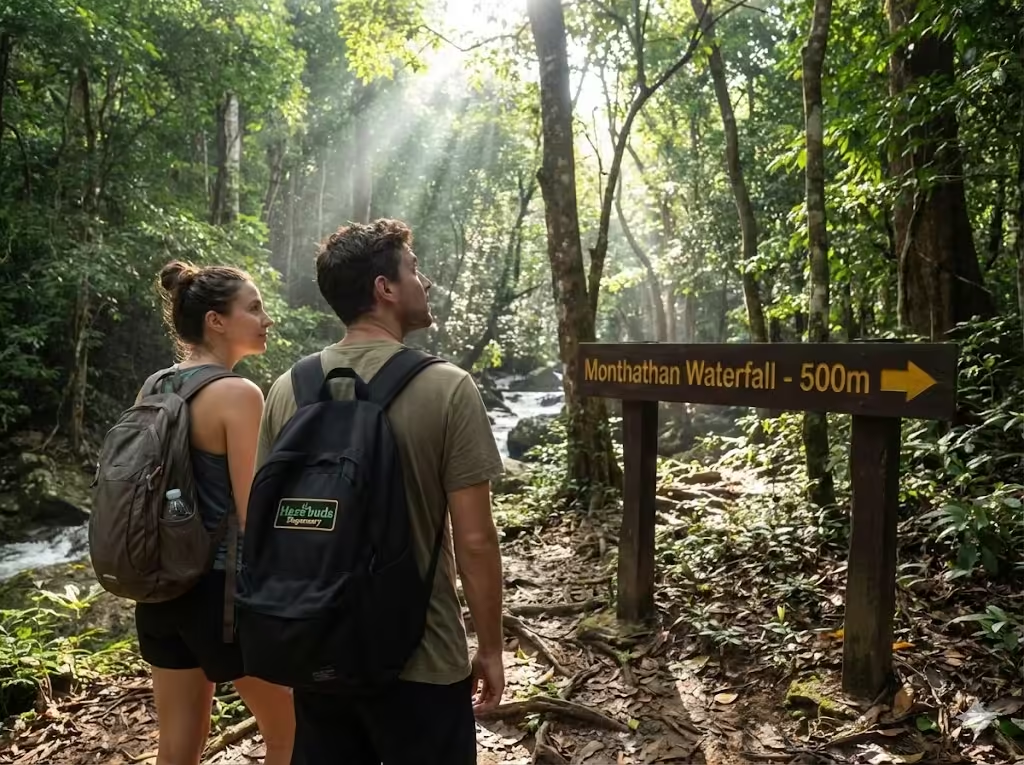
Head towards Chiang Mai University and take the road up towards Doi Suthep (Huay Kaew Road). Pass the zoo. Pass the Kruba Srivichai Monument (beep your horn for good luck like the locals do). About 3 kilometers past the monument, keep your eyes on the right side of the road. You will see a sign for “Monthathan Waterfall.” It’s a sharp right turn.
There is a National Park checkpoint.
Cost: The price varies for locals and foreigners (as is standard in Thailand). For foreigners, it is usually around 100 THB for adults plus 20 THB for a motorbike.
Worth it? Yes. That 100 THB is the “peace tax.” It keeps the crowds away.
Park your bike. Walk to the designated sitting areas. There are wooden platforms perfect for picnicking. Important Note: This is a National Park. Do not smoke while walking on the trail or in dry areas where fire is a risk. Be respectful. Find a quiet, safe spot, or partake before you enter the park gates. And absolutely, under no circumstances, leave trash behind. The rule of the stoner is: Pack it in, Pack it out. We want to keep these spots beautiful.
Let’s look at the economics of your afternoon.
The Grand Canyon Experience:
Entry Fee: 650 – 800 THB (for full water park access).
Locker rental: Extra.
Food/Drink: Tourist prices inside the park.
Transport: Grab or Taxi (approx. 300-400 THB each way).
Total Estimated Cost: 1,500+ THB per person.
The Monthathan Experience:
Entry Fee: 100 THB (Foreigner) + 20 THB (Bike).
Food/Drink: 100 THB (Bought from a local market beforehand).
Transport: Gas for your scooter (50 THB).
Total Estimated Cost: ~270 THB per person.
You save over 1,000 THB. That is 1,000 THB you can reinvest into… well, other things at Haze Buds. It’s simple math.
There is a spiritual aspect to Monthathan as well. Doi Suthep is a sacred mountain. Locals believe spirits reside in the old trees and the waterfalls. When you visit these places, you are participating in a local tradition of “Len Nam” (playing in water) and relaxing in nature.
At the Grand Canyon, you are in a man-made hole in the ground. At Monthathan, you are connected to the ecosystem that defines Chiang Mai. You are seeing the forest that gives the city its breath.
You might see monks walking along the road. You might see families making merit. It grounds you in the reality of where you are. You aren’t in a theme park; you are in Thailand.
Rainy Season (July – October): The waterfall is raging. It is powerful and wet. The forest is neon green. However, the rocks can be slippery.
Cool Season (November – February): The perfect time. The air is crisp, the water is cold, and the humidity is low.
Hot Season (March – April): This is when Monthathan is a lifesaver. When the city is choking on smog or heat, the waterfall remains a refuge. However, the water flow might be less “thundering” and more “trickling,” but the shade is still worth it.
Pro Tip: Go on a weekday morning (Tuesday or Wednesday). You will likely have the entire place to yourself.
Travel is about choices. You can choose the path of least resistance—the package tour, the Instagram trap, the place everyone else goes. Or you can choose the path that offers a little more depth.
At Haze Buds, we are in the business of enhancing experiences. We know that our products pair best with environments that are organic, soothing, and beautiful. The Grand Canyon is fun, but Monthathan is real.
It offers a quick escape from the chaos. It offers a cool breeze on a hot day. It offers the sound of silence that is so hard to find in the modern world.
So, next time you are staring at a map of Chiang Mai wondering where to spend your afternoon, listen to Gato. Pack a bag, grab your supplies from Haze Buds, and head up the mountain. The water is waiting.
If you want to read more you can click this button to read more.