
Wat Phra Singh Chiang Mai: A Calm Visitor’s Guide to the Old City Temple

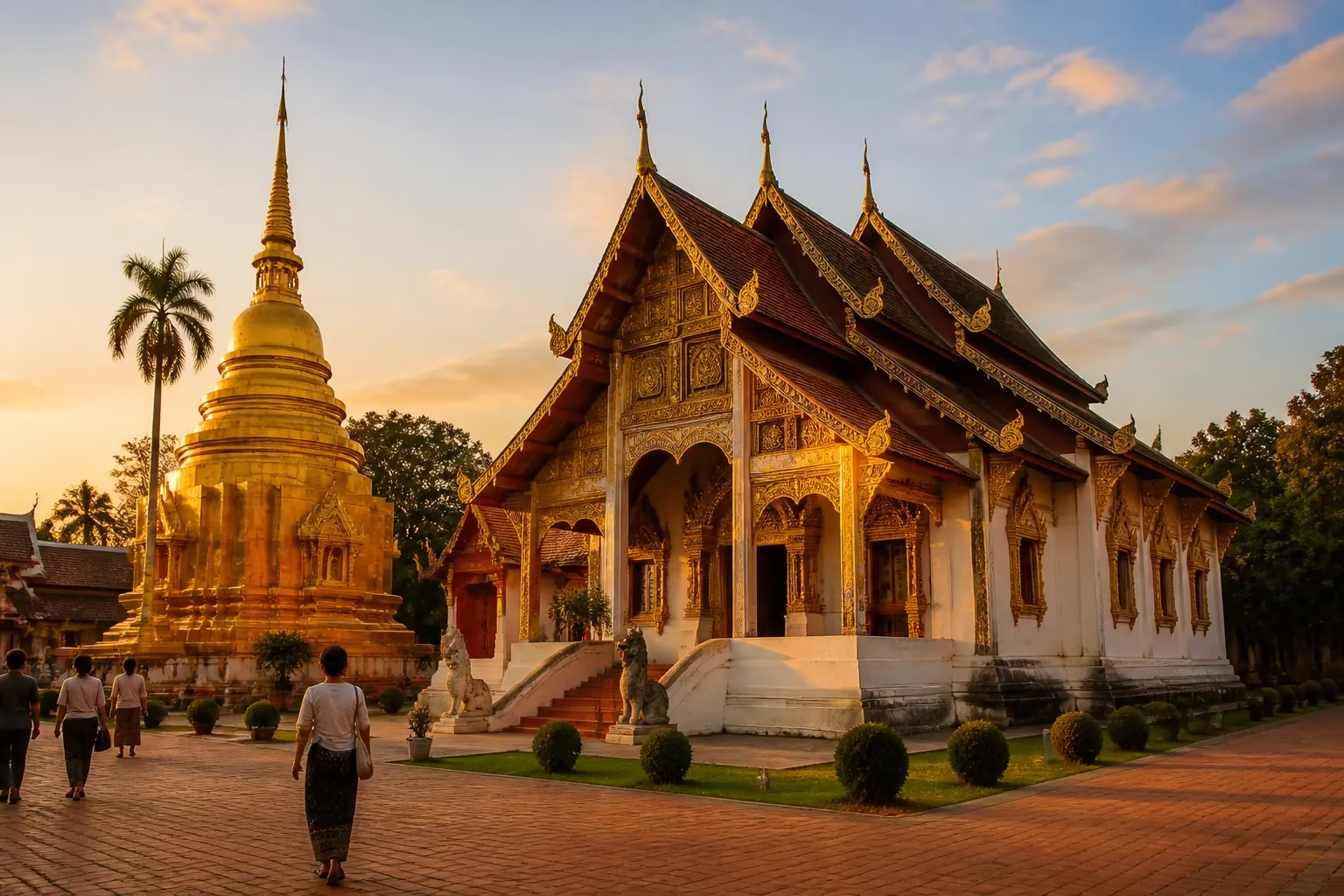
Wat Phra Singh's white and gold Lanna-style viharn and golden chedi in Chiang Mai Old City at golden hour, with a few visitors in the courtyard

Wat Phra Singh Chiang Mai: A Calm Visitor’s Guide to the Old City Temple

If you walk west along Rajdamnern Road from Tha Phae Gate, the street ends at the gates of Wat Phra Singh. It’s one of the most important temples in northern Thailand, home to a revered Buddha image and some of the finest Lanna art in the city, and it sits right in the heart of the Old City.

Many visitors pass through quickly on the way to somewhere else. Our team thinks it deserves an unhurried hour. Here’s a simple guide to what you’re looking at, when to go and how to visit respectfully.

A Short History

Wat Phra Singh dates back to the 14th century, when a Lanna king built a chedi here to hold the ashes of his father. The temple grew in importance after it received the Phra Buddha Sihing, a seated Buddha image that is deeply revered in the north. Its full name, Wat Phra Singh Woramahawihan, reflects its status as a royal temple of the highest class.

Today it’s still a working temple with resident monks and novices, a monastic school and a steady flow of local worshippers. Treat it as a place of practice first and a sight second, and you’ll enjoy it more.

What to See

The temple grounds are larger than they look from the street. A good, slow loop covers:
  • The main viharn (Viharn Luang): the large assembly hall facing the entrance, with a gold-and-red facade and a large seated Buddha inside. This is where most ceremonies take place.
  • Viharn Lai Kham: the smaller, older hall behind and to the left, and the highlight for many visitors. It houses the Phra Buddha Sihing image.
  • The golden chedi: the gleaming bell-shaped chedi behind the main halls, one of the most photographed spots in the Old City.
  • The Ho Trai (scripture library): a beautifully decorated building raised on a high base, built to keep palm-leaf manuscripts safe from damp and pests.
  • Quiet corners: shaded benches, small shrines and monks’ living quarters. Keep your voice low and don’t wander into areas marked for monks only.
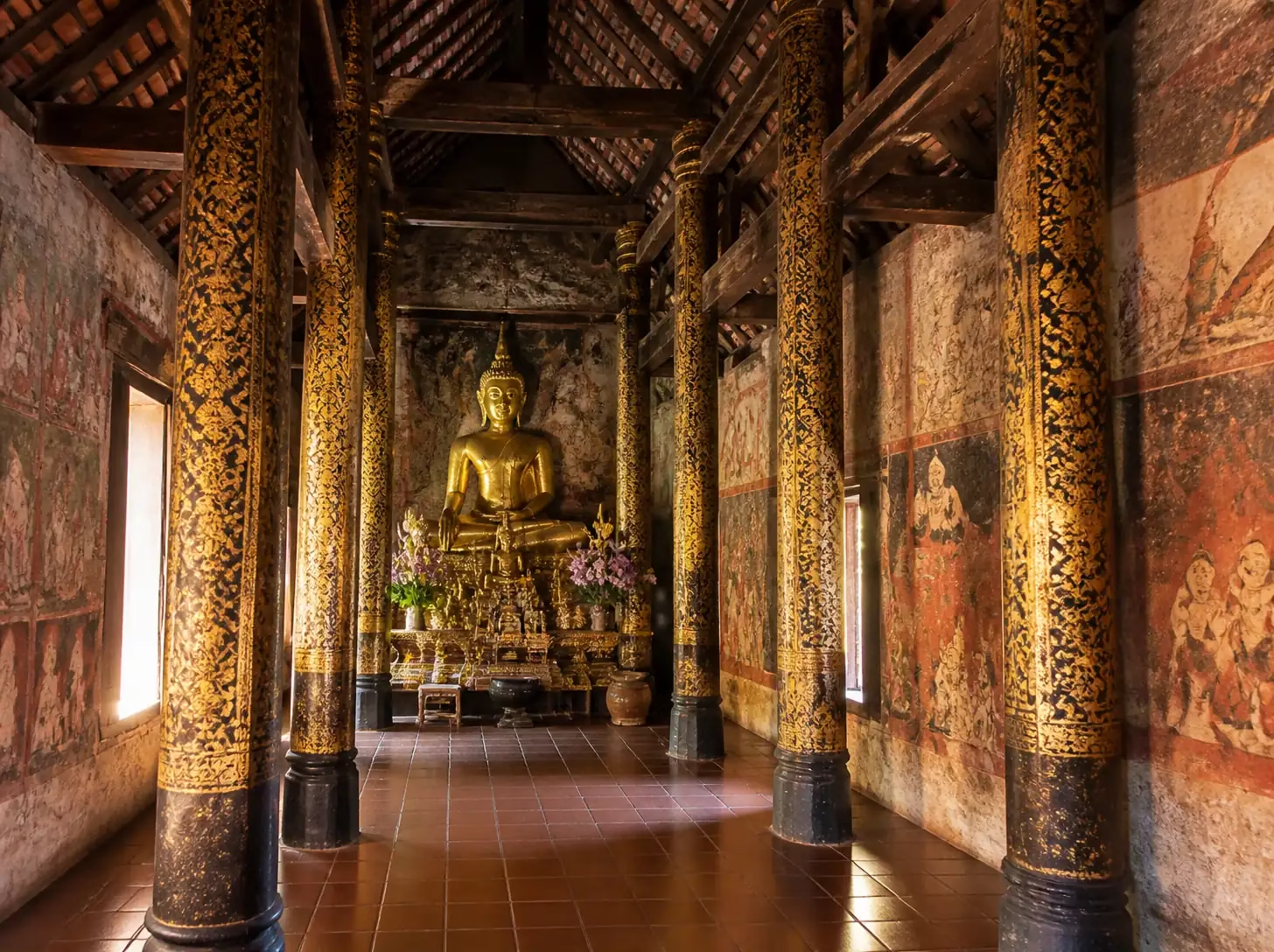
Gilded carved wooden pillars, faded Lanna murals and a seated golden Buddha image inside a small temple chapel in Chiang Mai
Let your eyes adjust to the soft light to see the murals' detail.

The Viharn Lai Kham Murals

Inside Viharn Lai Kham, look past the main Buddha image to the walls. The murals, painted in the 19th century, illustrate classic Lanna stories and, just as interestingly, everyday life in old Chiang Mai: people in traditional dress, market scenes, courtship and local customs.

Give your eyes a moment to adjust to the soft light and you’ll spot more detail than you expect. Photography rules can differ between buildings, so look for signs and follow any guidance from temple staff. If photos are allowed, switch off your flash.

What to Wear and Temple Manners

Wat Phra Singh is a busy, active temple, so the usual Thai temple manners apply. Our team’s checklist:

  1. Cover shoulders and knees. A T-shirt and long, loose trousers or a long skirt are ideal. A light scarf in your bag is an easy back-up.
  2. Take off your shoes before entering any building, and leave them neatly by the steps.
  3. Keep your feet pointed away from Buddha images and monks when you sit. Sitting with legs tucked to one side is the polite option.
  4. Be quiet and unhurried. People come here to pray, make merit and study.
  5. Give monks space. Women should avoid touching monks or handing items to them directly.
  6. Don’t climb on structures or pose with your back to a Buddha image for selfies.

If you’d like to understand temple life better, a monk chat at Wat Chedi Luang is a relaxed way to ask questions, and it’s only a short walk away.
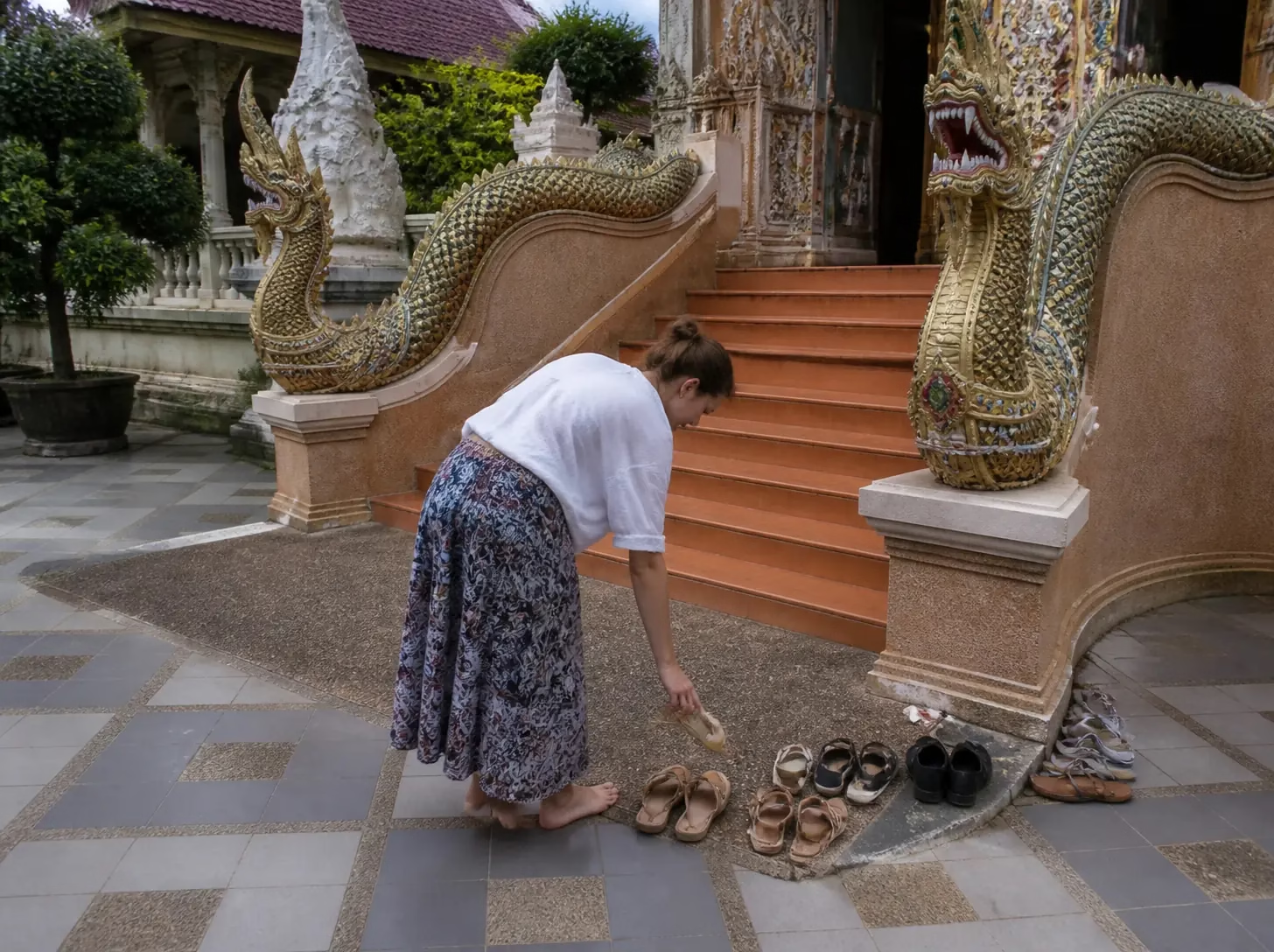
Traveller in a long skirt and covered shoulders placing her sandals beside other shoes at the foot of temple steps with Naga balustrades in Chiang Mai
Cover shoulders and knees, and leave your shoes neatly by the steps.

When to Visit

  • Early morning is the calmest time. The air is cooler, the light is soft and you’ll share the grounds mostly with monks and locals.
  • Late afternoon brings warm light on the chedi, but tour groups can still be around.
  • Sunday evenings are lively. The Sunday Walking Street market runs along Rajdamnern Road towards the temple, and the area gets very busy after dark.
  • Festival days such as Songkran see the Phra Buddha Sihing paraded through the city, which is a special sight but very crowded.

There may be a small entry fee for foreign visitors to some buildings, so carry a little cash. Opening times can vary, especially on religious holidays.

Make a Morning of It

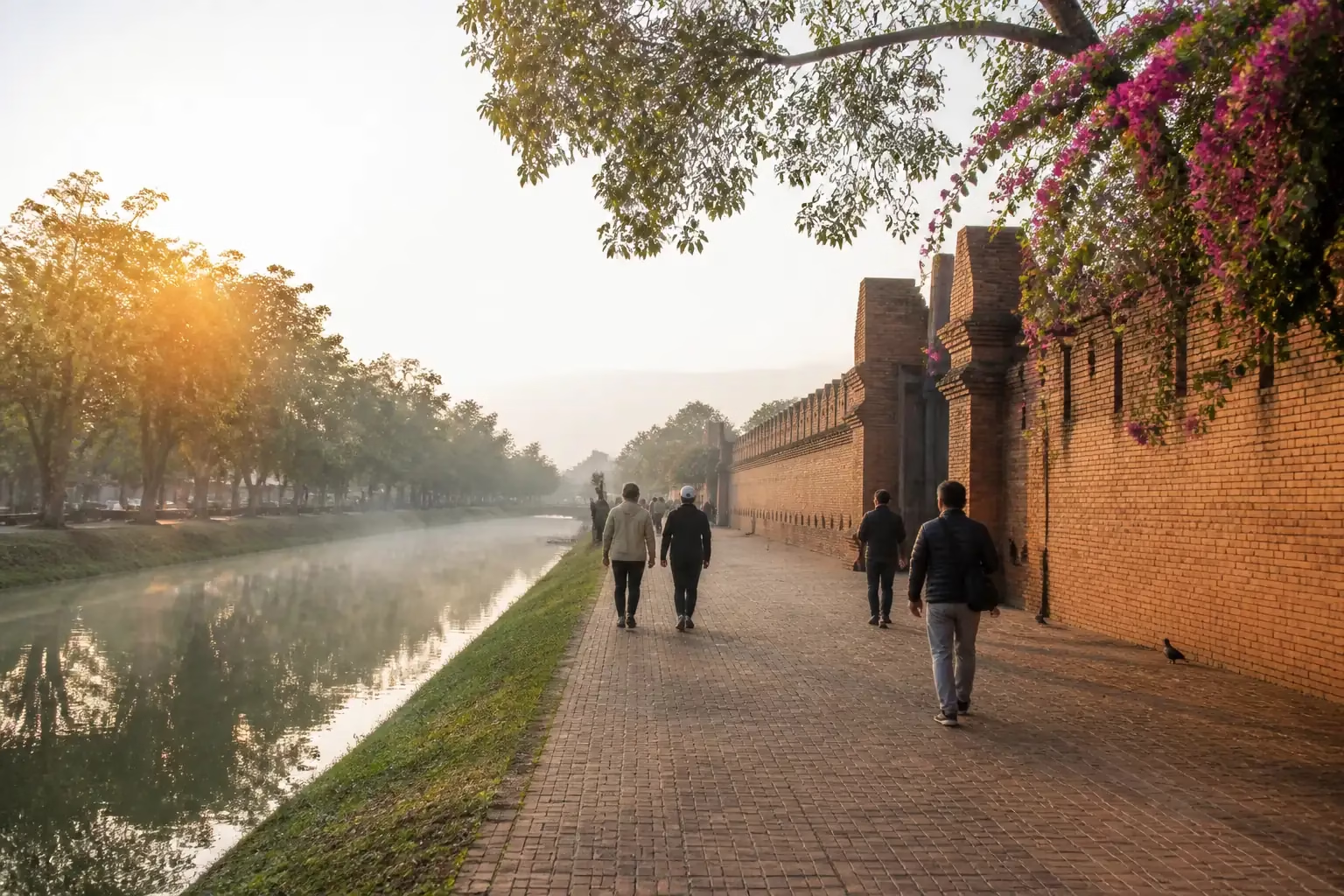
Wat Phra Singh fits neatly into a slow Old City morning. Start at Tha Phae Gate, stroll along Rajdamnern Road while it’s still quiet, spend an hour at the temple, then wander the side lanes for coffee. Our list of temples you can walk to in the Old City helps you link a few together without rushing.

If you’re visiting in late November, keep in mind that the Yi Peng festival fills Old City temples with lanterns and visitors, so plan quiet visits for earlier in the day. For a completely different temple atmosphere, the forest tunnels of Wat Umong in the morning make a lovely contrast.

Quick Tips

  • Bring water and a hat; the courtyards get hot by late morning.
  • Wear sandals that are easy to slip on and off.
  • Keep a few coins or small notes if you’d like to make a donation.
  • Step aside for ceremonies and don’t walk between worshippers and a Buddha image.

Wat Phra Singh rewards a slow pace. Give it time, follow the simple customs, and it becomes one of the most peaceful hours you’ll spend in Chiang Mai.
Follow Us :