
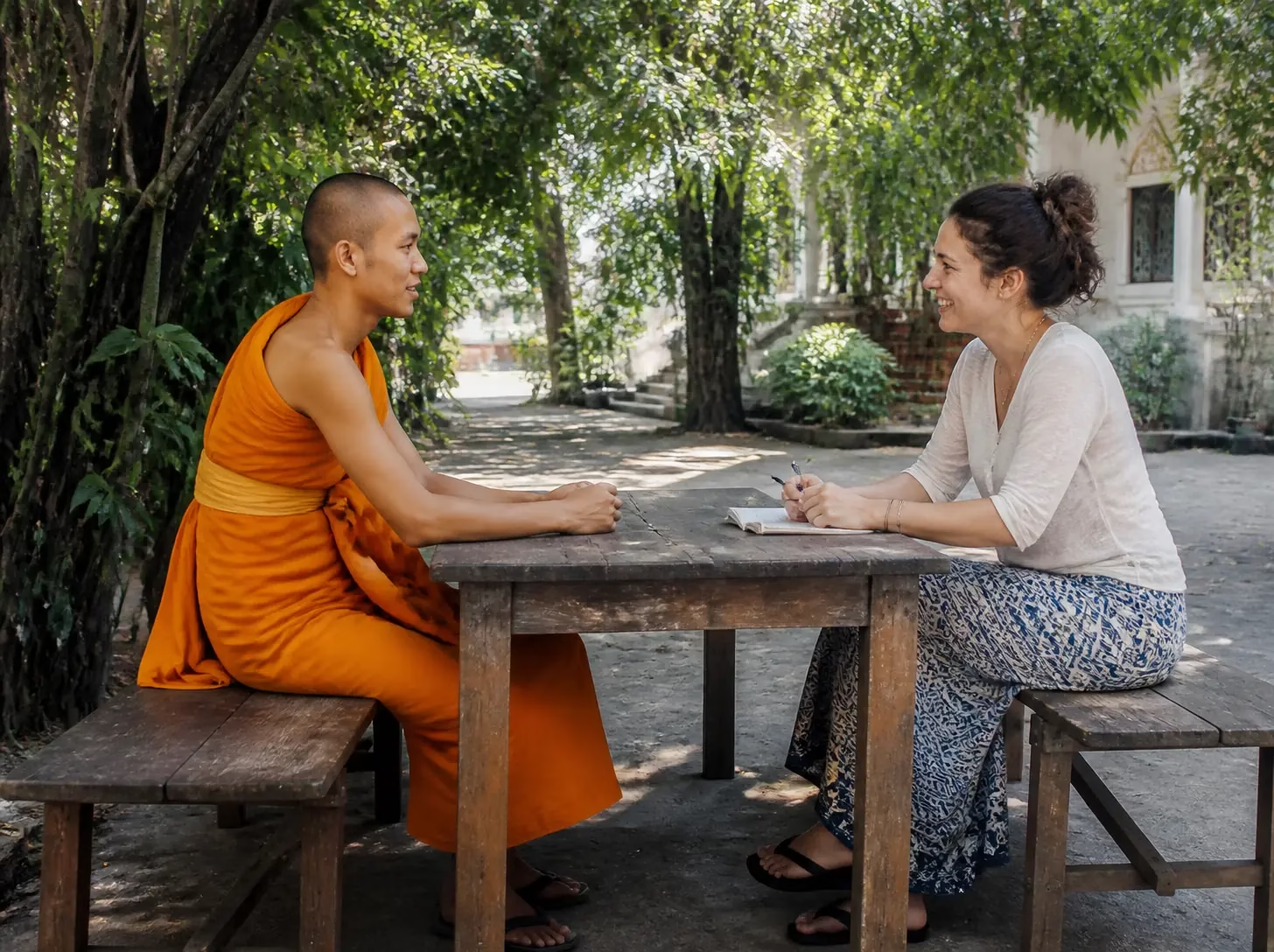
Most visitors to Chiang Mai see the temples. Far fewer actually talk to the people who live in them. At Wat Chedi Luang, right in the middle of the Old City, you can sit down with a young monk or novice and simply have a conversation. They practise their English; you get honest answers about daily life, meditation and Buddhism. It’s free, it’s relaxed and it’s one of the most memorable hours you can spend in town.
Here’s how monk chat works, when to go and how to make sure you’re a welcome guest.
Monk chat is an informal programme where monks and novices from the temple’s Buddhist university chat with visitors. It has been running at Wat Chedi Luang since the 1990s and grew out of a simple idea: the monks want to improve their English, and travellers are curious about the robes, the rules and the routines they see every day.
There’s no lecture and no sales pitch. You sit at a table, say hello and talk. Many of the people you meet are novices in their late teens or early twenties, often from rural northern Thailand, Shan State or Laos, who came to the temple to study. Some will ask you as many questions as you ask them, about your country, your job or what you think of Thai food.
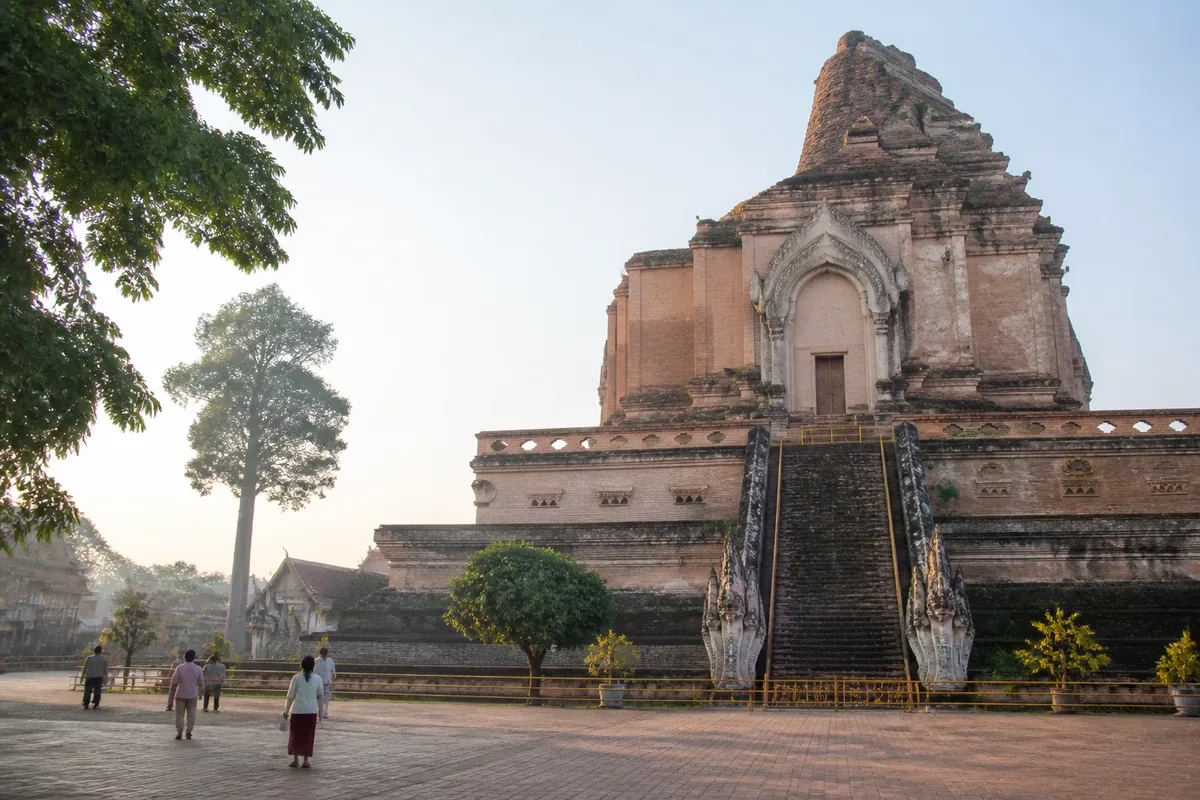
Wat Chedi Luang sits on Phra Pokklao Road, a short walk from the Three Kings Monument and Tha Phae Gate. The temple grounds are generally open from about 6:00 AM to 6:00 PM, and foreign visitors pay a small entry fee (around 40 THB at the time of writing).
Monk chat tables are usually set up in a shaded area on the north side of the grounds, near the school buildings behind the great chedi. Look for a sign that says “Monk Chat”. Sessions run through most of the day, roughly from morning until late afternoon, but monks have classes, chanting and exams, so the tables can be quiet at times. In our experience a weekday afternoon is the most reliable window. Programmes change, so if no one is around, ask at the entrance or come back later.
If you can’t make it to Wat Chedi Luang, two other temples have hosted similar sessions:
Times at all three temples change from term to term, so check on the day before you plan your afternoon around it.
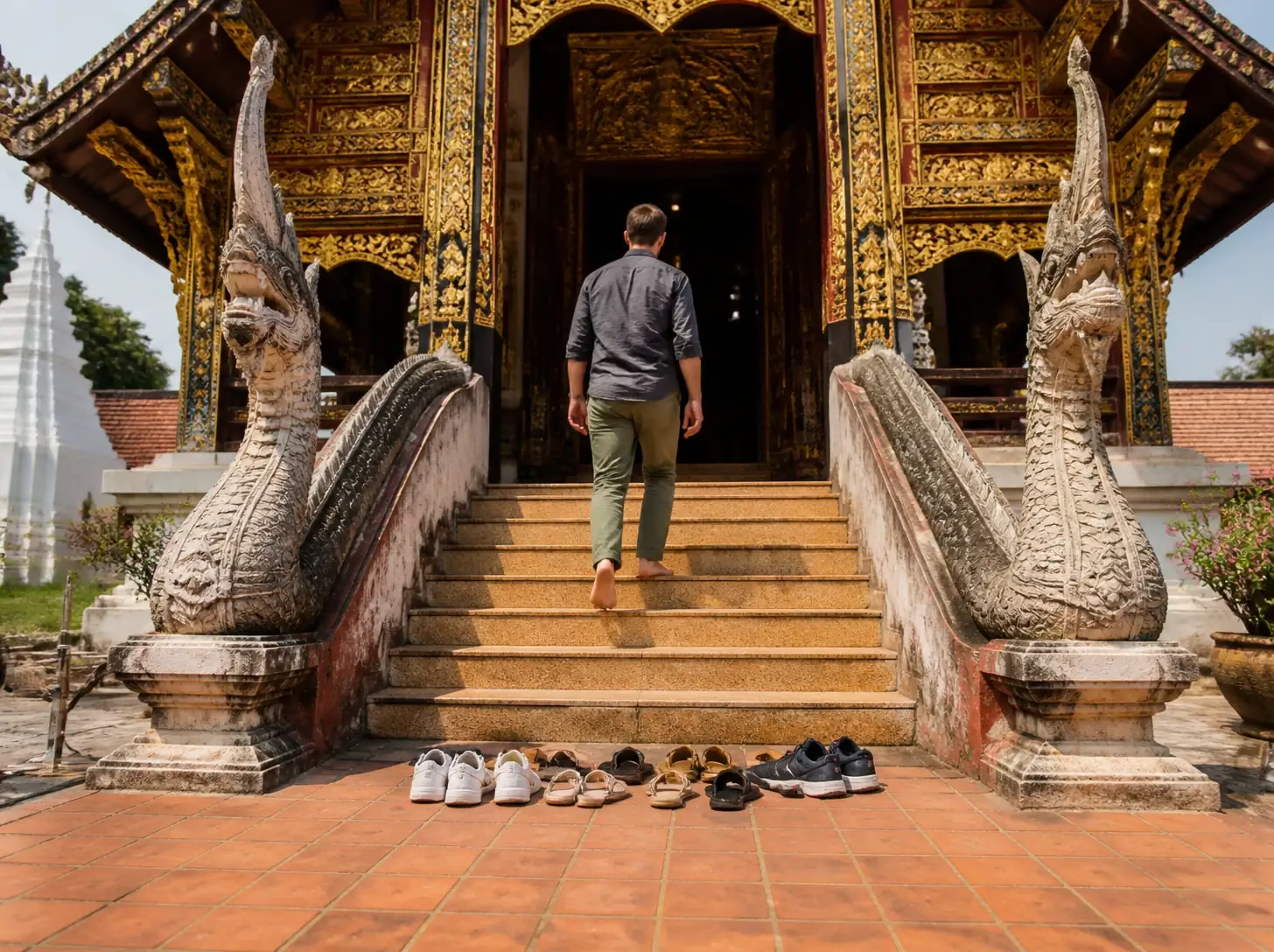
A temple is a place of worship first and a tourist sight second. A little preparation shows respect and makes the monks more comfortable.
Monks are generally happy to talk about almost anything, but conversations go best when you’re genuinely curious. A few ideas to get you started:
You can also ask about the temple itself. Wat Chedi Luang’s great chedi was begun in the late 14th century and was once among the tallest structures in the Lanna kingdom before an earthquake in the 16th century brought down its upper section. For a time it housed the Emerald Buddha, which is now in Bangkok. The monks often know these stories well and enjoy sharing them.
Topics to approach gently: politics and the monarchy are best avoided altogether, and questions about money or personal relationships can make people uncomfortable. If a monk changes the subject, follow their lead.
There’s no fixed length. Some visitors stay 15 minutes; others talk for over an hour. Watch for cues: if other visitors are waiting, or the monk needs to head to class, wrap up politely.
Monk chat is free. If you’d like to show appreciation, put a small donation in one of the temple’s donation boxes on your way out rather than offering cash directly. A sincere “khop khun krap” (from men) or “khop khun ka” (from women) and a wai go a long way.
Monk chat fits neatly into a slow afternoon in the Old City. Before you go, explore the grounds: the restored chedi with its elephant sculptures, the city pillar shrine (Sao Inthakin) and the reclining Buddha in its own small viharn. Then carry on to nearby temples. Wat Phan Tao, the teak temple next door, is a two-minute walk, and Wat Phra Singh is around ten minutes west. Our list of temples you can walk to from the Old City has an easy route.
If you enjoy quiet, reflective places, Wat Umong’s forest walk in the morning makes a good partner visit on another day. And as the light fades, a walk around the moat at dusk is a lovely way to finish. If it’s a Saturday, the Wualai walking street near Chiang Mai Gate starts in the late afternoon, close to Wat Sri Suphan.
Monk chat is a reminder that Chiang Mai’s temples are living places, full of students with exams, chores and their own questions about the world. Sit down, say hello and you’ll probably leave with a new perspective, and maybe a new friend in saffron robes.
When you’re back in the Old City, our team at Haze Buds is always happy to share more local tips. Just stop by and say hi.