
In the world of cannabis consumption, glass has long been the undisputed king. We all know the drill: borosilicate glass, scientific percolators, ash catchers, and intricate ice notches. Glass is clean, it’s transparent, and it’s the industry standard.
But let’s be honest for a moment. How many glass bongs have you broken in your life?
There is a distinct, heartbreaking sound that every stoner knows. It’s the sound of a 3,000 Baht piece of art tipping over on a coffee table, or slipping out of soapy hands in the sink. Crash. Game over.
At Haze Buds, we appreciate high-quality glass. But being based in Chiang Mai—the heart of the Lanna Kingdom and the capital of wood carving in Southeast Asia—we know there is another way. A way that is warmer, more durable, and deeply connected to the earth.
We are talking about Thai Teak Wood Bongs.
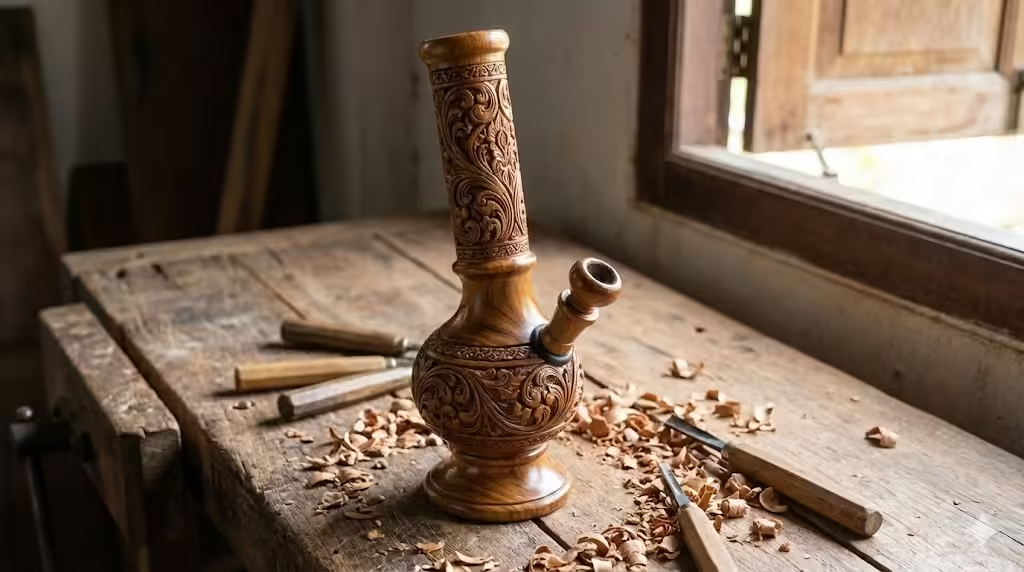
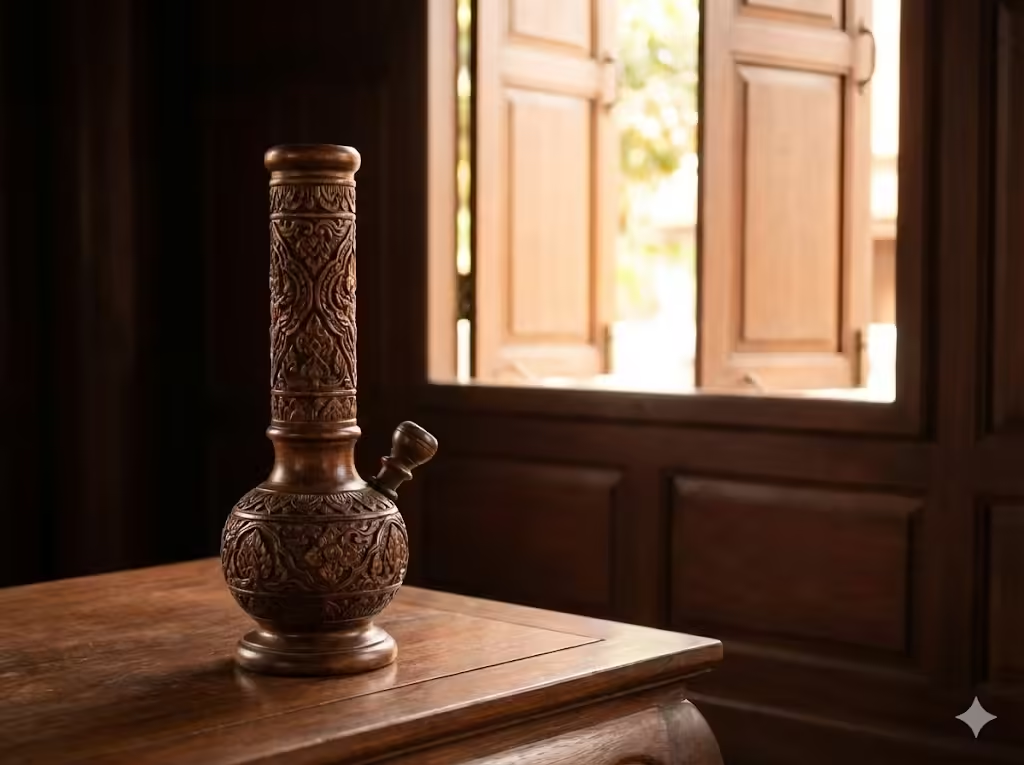
You might have seen them on our shelves. Dark, rich, polished wood that looks more like a piece of mid-century modern furniture than a smoking apparatus. You might have thought, “That looks cool, but does it work?”
The answer is yes. In fact, for many of our regulars and staff members, once they switch to teak, they never go back to glass. It isn’t just about aesthetics (though they are undeniably beautiful); it’s about physics, flavor, and functionality.
Here is the deep dive into why your next piece should be carved from the sacred forests of the North.

To understand why these bongs are special, you have to understand the material. We aren’t talking about cheap plywood or bamboo. We are talking about Teak (Tectona grandis), or as we call it in Thai, Mai Sak.
In Northern Thai culture, Teak is considered a noble wood. For centuries, it was reserved for palaces, temples (like the ones we mentioned in our Old City walking guide), and the homes of nobility. Why? Because Teak is virtually indestructible.
Teak is rich in natural oils and silica. This makes it naturally resistant to termites, rot, fungi, and water damage. In the humid climate of Thailand, where other woods warp and rot, Teak stands firm. There are Teak houses in Chiang Mai that are over 100 years old and still structurally sound.
When you buy a Teak bong from Haze Buds, you are buying a piece of this legacy. You are holding a material that was grown in the rich soil of the Golden Triangle. It carries the energy of the land. Unlike glass, which is melted sand produced in a factory, every teak bong was once a living tree that stood in the Northern mountains.
This is the scientific argument that usually converts glass-lovers.
Glass is a thermal conductor. It changes temperature rapidly. If you leave a glass bong in a hot room, the glass gets hot. If you put ice in it, it gets cold, but the condensation makes it slippery.
Wood, specifically Teak, is a thermal insulator.
When you light a bowl, the smoke is hot. In a glass bong, unless you have ice, that heat is often transferred directly up the neck. A Teak bong behaves differently. The wood itself absorbs very little heat from the environment, but its porous, organic nature helps to mellow out the smoke.
Insulation: The thick walls of a turned teak bong keep the water temperature stable for longer.
Resonance: There is a theory among audiophiles that wood speakers sound better because of resonance. Smokers argue the same for bongs. The “chug” of a wood bong sounds deeper, more muffled, and satisfying. It doesn’t have that high-pitched “clink” of glass.
Glass is inert; it adds no flavor. Wood is organic. Over time, a Teak bong “seasons” like a cast-iron skillet. The first few times you use it, you might taste a hint of earthy, woody notes—like standing in a sauna or a forest after the rain. This isn’t a bad thing. It pairs incredibly well with earthy strains like OG Kush or Diip CBD oils. It adds a layer of richness to the terpene profile that clinical glass strips away.
Let’s go back to the heartbreak of broken glass.
If you are a clumsy person, or if you have a cat that loves to knock things over, a glass bong is a ticking time bomb. It’s not a matter of if it will break, but when.
A Teak bong is a tank. You can knock it over. You can drop it on a tile floor. You can pack it in your checked luggage without wrapping it in ten layers of bubble wrap. It will not shatter. At worst, you might dent the wood slightly. But here is the beauty of wood: Dents add character.
A scratched glass bong looks ruined. A scratched wooden bong looks rugged. It looks like it has stories to tell. It develops a patina—a soft sheen that comes from the oils in your hands handling the wood over months and years. This makes a Teak bong a true “Buy It For Life” item. You aren’t renting it until it breaks; you are keeping it forever.
The stigma around cannabis is fading, but let’s be real: a dirty glass bong with brown water stains sitting on a coffee table looks… trashy. It looks like a dorm room.
A Teak bong looks like Art.
Because of the rich grain patterns (golden brown to dark chocolate streaks), a Teak bong blends in with your home decor. Place it on a bookshelf next to your vinyl records. Put it on your coffee table next to a succulent plant. It doesn’t scream “I get high all day.” It whispers, “I appreciate craftsmanship.”
We often tell our customers at Haze Buds that the switch to wood is part of “growing up” as a cannabis enthusiast.
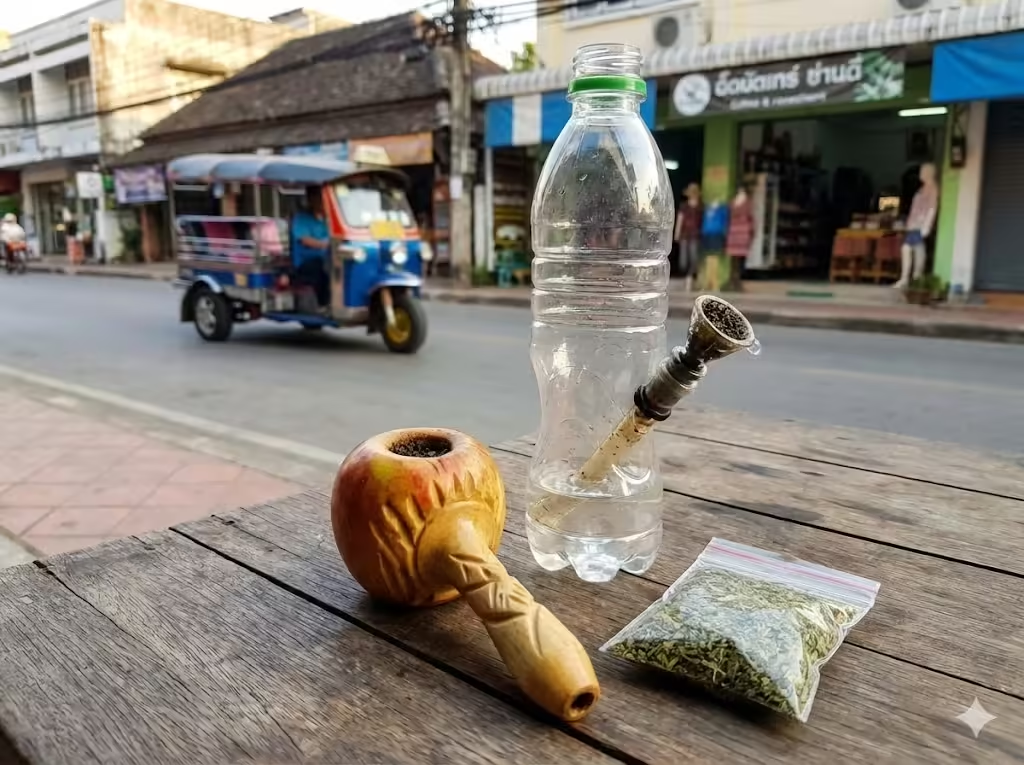
Phase 1: The Apple Pipe / Plastic Bottle (Teenager).
Phase 2: The Acrylic Bong (College).
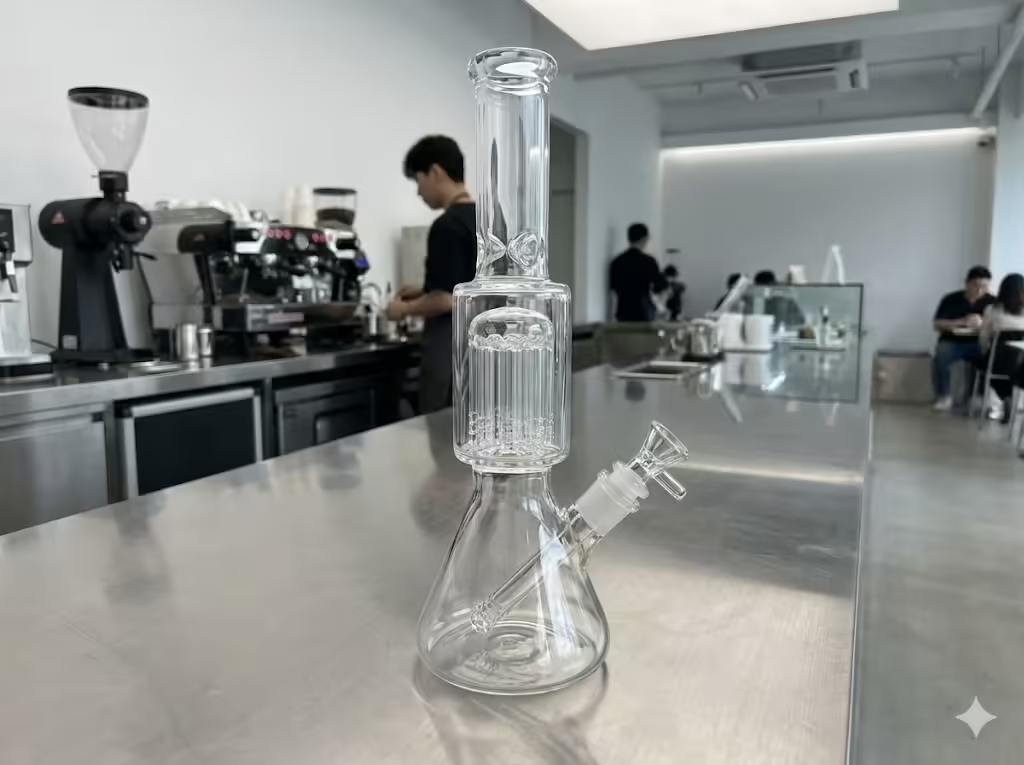
Phase 3: The Scientific Glass Bong (The Enthusiast).
Phase 4: The Teak Wood Bong (The Connoisseur).
It signals sophistication. It shows that you value the ritual and the vessel as much as the product itself.

Chiang Mai is famous for Baan Tawai, the woodcarving village. However, the industry has struggled in recent years as mass-produced plastic and resin furniture from factories has taken over.
By choosing a Thai Teak bong, you are directly supporting local artisans. These bongs aren’t churned out by machines. They are hand-turned on lathes by skilled craftsmen who have been working with wood for generations. They know how to select the block of wood to ensure the grain flows beautifully around the curves of the bong. They know how to sand it down to a finish that feels like silk.
At Haze Buds, we source our wood collection locally. When you buy one, you are keeping the Lanna woodturning tradition alive, but adapting it for a modern use case.
The number one hesitation customers have is: “Is it hard to clean?”
It is a valid question. You can’t just soak wood in isopropyl alcohol and salt for 24 hours like you do with glass (alcohol can dry out the wood if left too long). But cleaning a wood bong is actually quite therapeutic.
Here is the Haze Buds Maintenance Protocol:
1. Daily Rinse: After a session, dump the water. Rinse it with warm water. Do not let old bong water sit in wood for a week. That’s gross in glass, and it’s gross in wood.
2. The Scrub: For the inside, use a bottle brush with warm water and a mild dish soap. Because teak is naturally water-resistant, it won’t rot from a quick wash.
3. The Deep Clean (The Salt Shake): If it gets resin buildup, you can use salt and a little bit of alcohol, but be quick. Swish it around to scrub the resin, then rinse immediately and thoroughly with water.
4. The Polish (The Secret Step): This is what makes owning a wood bong special. Every few months, treat the outside of the bong with wood oil or beeswax (even coconut oil works in a pinch). Rub it in with a soft cloth. Watch as the wood drinks up the oil. Watch the grain pop. Watch the color deepen. It’s a ritual of care that connects you to the object. You don’t polish a glass bong; you just wipe it. You nurture a wood bong.
“Won’t it burn?”
This is the most common question. The answer is: No, not really.
Most Teak bongs come with a glass or metal downstem and bowl. The fire touches the glass/metal, not the wood. Even if you have a wooden bowl, teak is a very dense hardwood. It is resistant to fire. It takes a continuous, high-heat flame to actually ignite teak. A lighter flicked for 3 seconds to light a corner of a bowl will only char the inner rim slightly over years of use (creating a protective carbon layer). You are safe.
We are living in a time where we are trying to reduce plastic and waste.
Glass: Energy-intensive to produce (high heat furnaces). If it breaks, it’s trash.
Silicone: It’s plastic. It will sit in a landfill for 500 years.
Teak: It’s carbon capture. The tree absorbed CO2 while it grew. It is biodegradable. If you throw a teak bong into the forest, it eventually returns to the earth.
For the eco-conscious smoker, wood is the most ethical choice.
We have curated a specific line of Teak accessories to match every vibe.
1. The “Bamboo” Style Teak Bong: Carved to look like a segment of bamboo, but made of solid teak. It’s tall, slender, and elegant. Perfect for a smooth, long draw.
2. The “Fat Boy” Base: A shorter, wider base design. This maximizes water volume for cooling and is incredibly stable on a table. This is the “clumsy-proof” model.
3. The Hybrid: We also carry bongs that feature a teak wood base and neck, but with a glass window in the middle so you can still see the bubbles and the smoke density. Best of both worlds.
Chiang Mai is not just a destination; it is a feeling. It’s the smell of the mountains, the slow pace of life, and the appreciation for things made by hand.
A Thai Teak Wood bong encapsulates that feeling. It is a souvenir that you will actually use. It is a tool that improves with age. And it is a statement that you value quality over convenience.
Next time you are in Haze Buds, don’t just walk past the wooden section. Pick one up. Feel the weight of it. Feel the warmth of the grain against your palm. Imagine how it will look on your table back home.
Glass is for seeing. Wood is for feeling.
If you want to read more you can click this button to read more.


Copyright © 2023 Haze Buds | Powered by C&R Group
