
We have all been there. You buy a gorgeous, intricate glass rig. You love it. You name it. And then, one day, your cat jumps on the table, or your hand slips while cleaning it, or you simply set it down too hard on a tile floor.
Smash.
The heartbreak of broken glass is a rite of passage for every cannabis enthusiast. And usually, after the second or third broken bong, you make a vow: “I am never buying glass again. I need something indestructible.”
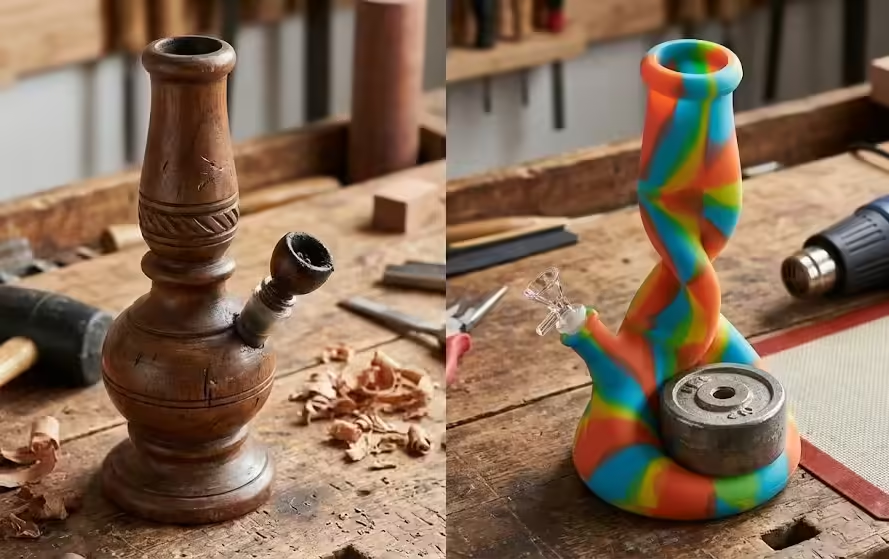
This search for durability usually leads to two main contenders: Silicone and Teak Wood.
On one side, you have the modern marvel of chemistry: bright, bouncy, medical-grade silicone. On the other side, you have the ancient wisdom of nature: solid, dense, hand-carved Thai Teak.
Both claim to be “unbreakable.” Both claim to be travel-friendly. But which one actually stands the test of time? Which one is a temporary fix, and which one is a lifetime investment?
At HazeBuds Cannabis Dispensary, we have tested everything. From our Old City branch to Sridonchai, we stock the best accessories for the Chiang Mai lifestyle.
“Buy it for life. Buy Teak.”
While silicone might survive a fall, it won’t survive the calendar. Wood does both. Here is our brutal, honest durability test comparing the synthetic against the natural.
The “Bouncy Castle” of Smoking
Silicone bongs exploded onto the market about 10 years ago. They are made from a rubber-like polymer that is heat resistant and flexible. They come in neon colors, glow-in-the-dark patterns, and often separate into parts for cleaning.
Impact Resistance: You can throw a silicone bong off the roof of a condo in Nimman, and it will bounce. It is physically impossible to shatter it by dropping it.
Flexibility: You can squish it into a suitcase. It bends and returns to its original shape.
The “Funk” Factor: Silicone is technically porous on a microscopic level. Over time, it absorbs the smell of bong water and resin. No matter how much you scrub it with alcohol or boil it, that stale, sour smell eventually permeates the material itself. A 6-month-old silicone bong smells… bad.
The “Floppy” Factor: Over time, and with exposure to heat, lower-quality silicone can lose its structural integrity. The neck starts to droop. The base gets wobbly.
The Aesthetic: Let’s be honest. It looks like a dog toy. It looks cheap. It is fine for a pool party, but do you really want it sitting on your coffee table when you have a date over?
The “Lanna Fortress”
Teak (Mai Sak) is the iron of the forest. It is the wood used to build palaces, temples, and ocean-faring boats because it is naturally resistant to water, rot, and insects. At HazeBuds, our wooden bongs are carved from single blocks of this legendary timber by local artisans.
Impact Resistance: Teak is a hardwood. If you drop it on concrete, it might get a scratch or a dent. It adds character. It does not shatter. It makes a solid thud and survives.
The “Cure” Factor: Unlike silicone which degrades, wood improves. As you smoke, a layer of carbon builds up inside the bowl (the “cake”), protecting the wood. The oils from your hands polish the exterior. A 10-year-old Teak bong looks better than a brand new one.
Water Resistance: Teak is famous for its natural oils (tectoquinones) that repel water. It doesn’t rot easily, even if you leave water in it (though we recommend changing it!).
Weight: It is heavy. It isn’t as light as plastic.
Fire Care: You can’t hold a torch lighter against the wood rim for 5 minutes straight, or it will char. You have to smoke the weed, not the pipe.
Let’s pit them against each other in four categories essential for the Chiang Mai traveler.
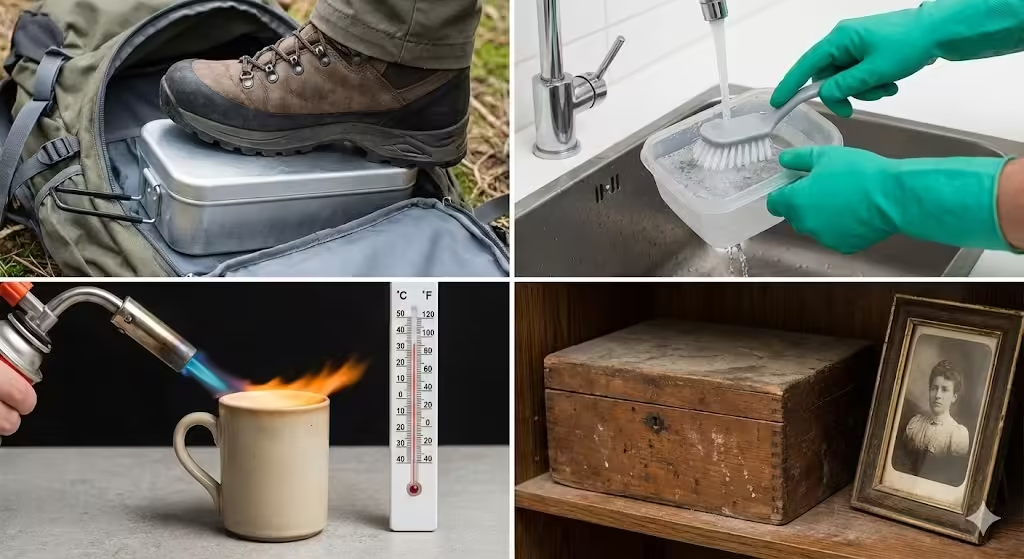
Scenario: You jam the bong into a 40L backpack and throw it under a bus to Pai.
Silicone: Squishes down. Survives. Score: 10/10
Teak: Does not squish. Takes up space. But protects anything inside it. Survives. Score: 9/10
Winner: Draw. Both are travel-ready.
Scenario: You have used the bong every day for 6 months.
Silicone: The material has developed a permanent yellow stain. It smells like old damp socks. The inside surface has become slightly sticky as the polymer degrades from interaction with terpenes. You want to throw it away. Score: 3/10
Teak: The wood has darkened to a rich amber. It smells like leather, earth, and a hint of smoked cannabis. You rinse it with hot water, maybe oil the outside, and it feels fresh. Wood is naturally antibacterial to some degree. Score: 9/10
Winner: Teak. Wood ages gracefully; plastic ages poorly.
Scenario: You are lighting a bowl.
Silicone: Silicone bongs usually have a glass bowl piece because you cannot light silicone directly. If the flame touches the silicone rim, it releases harsh chemical fumes. If you lose the glass bowl, the bong is useless.
Teak: Our bongs are wood all the way through (or have brass fittings). If the flame touches the wood, it chars slightly, creating a carbon layer. It is natural. You aren’t inhaling melting plastic fumes.
Winner: Teak. It is safer to inhale near natural material than synthetic polymers.
Scenario: 5 years from now.
Silicone: It is in a landfill. It has cracked or become too gross to use. You have bought 3 more since then.
Teak: It is sitting on your shelf. It is your favorite piece. It has traveled with you to three countries. You might pass it down to your kids (if they are cool).
Winner: Teak. This is the “Buy It For Life” philosophy.
We live in a world drowning in plastic. Thailand, in particular, struggles with waste management. Every time you buy a silicone bong, you are buying a petroleum product that will eventually end up in the earth, taking 500 years to decompose.
When you buy a HazeBuds Teak Bong:
Biodegradable: It is wood. If you throw it in the forest, it returns to the soil.
Carbon Capture: The tree absorbed CO2 while it grew.
Local Economy: You are supporting a grandfather in a village in Northern Thailand who carved it, not a factory assembly line.
If you consider yourself a “natural” smoker who prefers organic papers and outdoor-grown weed, why would you smoke out of a chemical tube?
Durability isn’t just about not breaking; it’s about staying enjoyable.
Smoking is a ritual. When you pick up a silicone bong, it feels squishy. It feels cheap. It kills the vibe of smoking premium, top-shelf Banana Melt (Indica). It feels like drinking expensive wine out of a Solo cup.
When you pick up a Teak bong, it has gravitas. It has weight. The grain feels warm against your palm. The smoke that travels through wood has a different resonance—it sounds deeper, chuggy, and earthy. It mellows the flavor of the cannabis, rounding off the sharp edges.
It elevates the session from “getting high” to “appreciating the herb.”
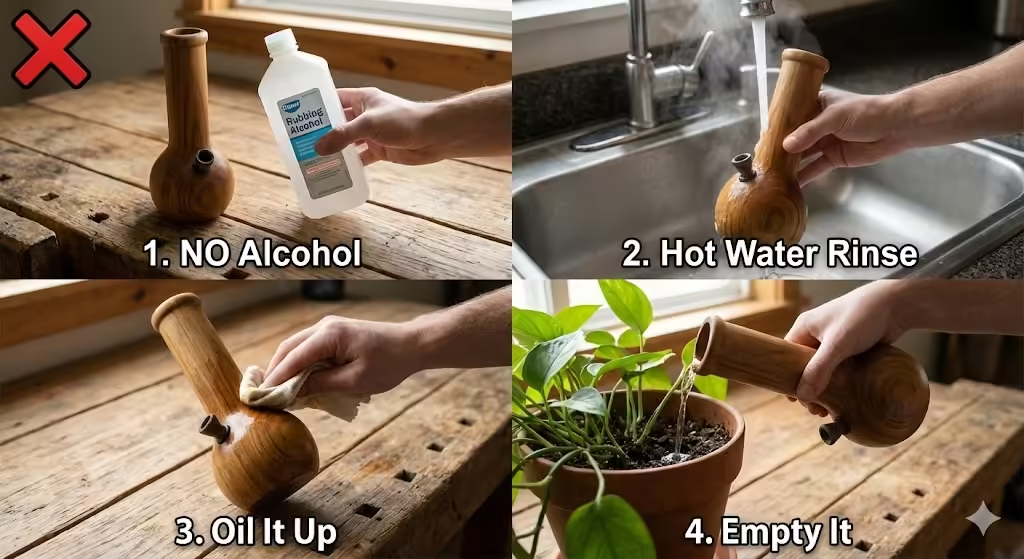
If you choose the path of wood, you need to treat it with respect. It is low maintenance, but not no maintenance.
NO Alcohol: Do not soak wood in Isopropyl Alcohol. It strips the natural oils and dries the wood out, leading to cracks.
Hot Water Rinse: Clean it immediately after use with very hot water. The heat melts the resin.
Oil It Up: Once a month, rub the exterior with coconut oil, olive oil, or beeswax. This feeds the wood and keeps it shiny and water-resistant.
Empty It: Don’t leave bong water sitting in it for weeks. Wood is rot-resistant, not magic. Treat it well, and it will outlive you.
If you want a cheap, disposable toy to take to a Full Moon Party and leave on the beach? Buy Silicone.
If you want a companion. If you want a piece of art. If you want a tool that survives drops, resists smells, and supports the local culture of Chiang Mai? Buy Teak.
At HazeBuds, we have a curated selection of hand-carved teak bongs. Some are simple straight tubes; some are carved into intricate shapes like elephants or abstract art. No two are the same.
Stop by our shop. Hold one in your hand. Feel the difference between the “Bouncy Castle” and the “Fortress.”
Buy it for life. Buy Teak.
See you at HazeBuds.


Copyright © 2023 Haze Buds | Powered by C&R Group
