How Long Do Edibles Typically Take to Work? A Metabolic Guide
Introduction: The Temporal Gap
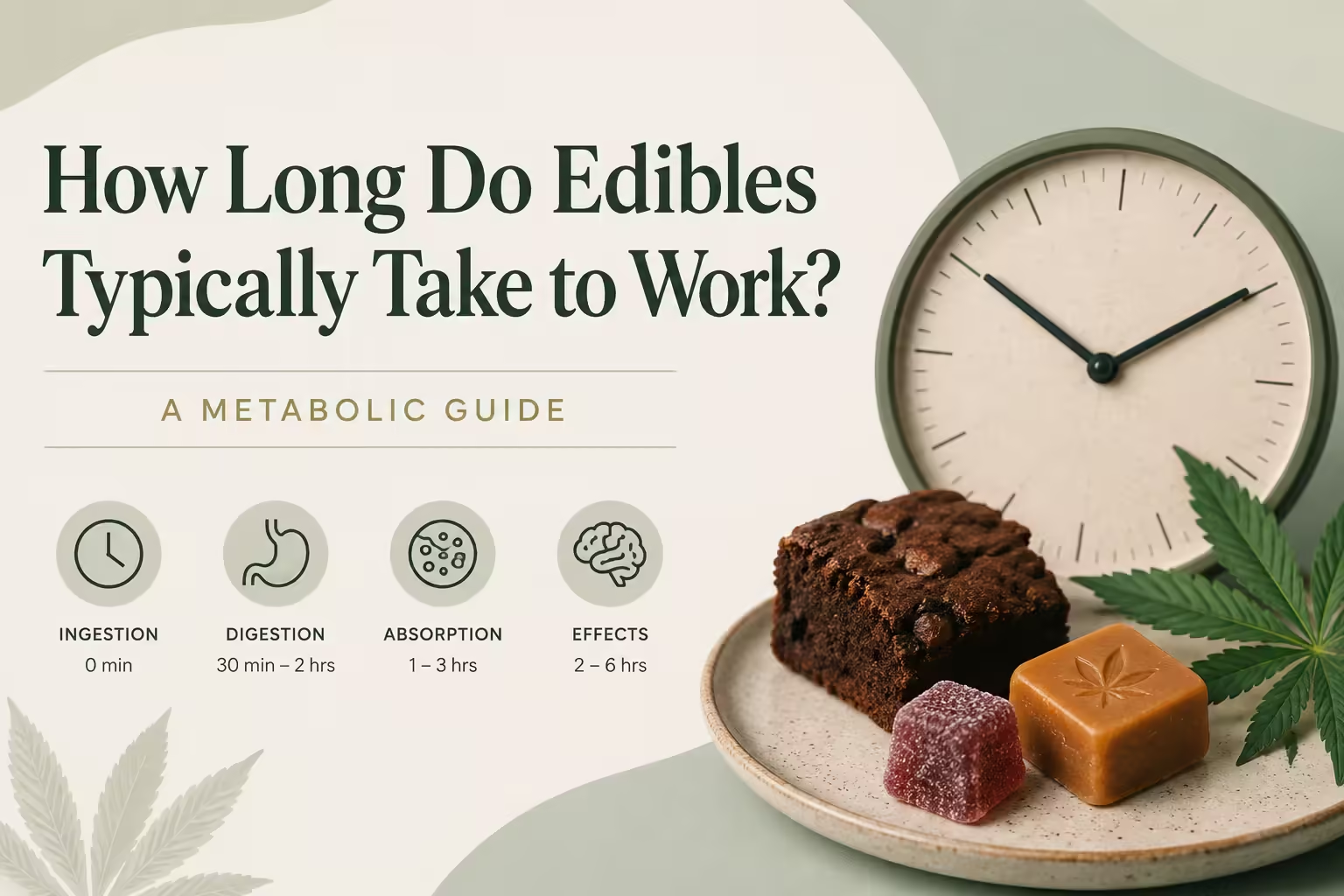
Many people beginning their botanical journey often wonder, How long do edibles typically take to work? In the study of plant chemistry, one of the most significant distinctions between consumption methods is the “onset time”—the duration between ingestion and the first detectable physiological effects. For those seeking to understand cannabis, addressing the timeline of oral consumption is not merely a matter of convenience, but a fundamental aspect of pharmacological literacy.
Unlike inhalation, which provides near-instantaneous feedback, oral ingestion is subject to the complexities of the human digestive system. This guide explores the biological “waiting game” and the factors that dictate the edible timeline.
1. The Digestive Pathway: A Slow Journey
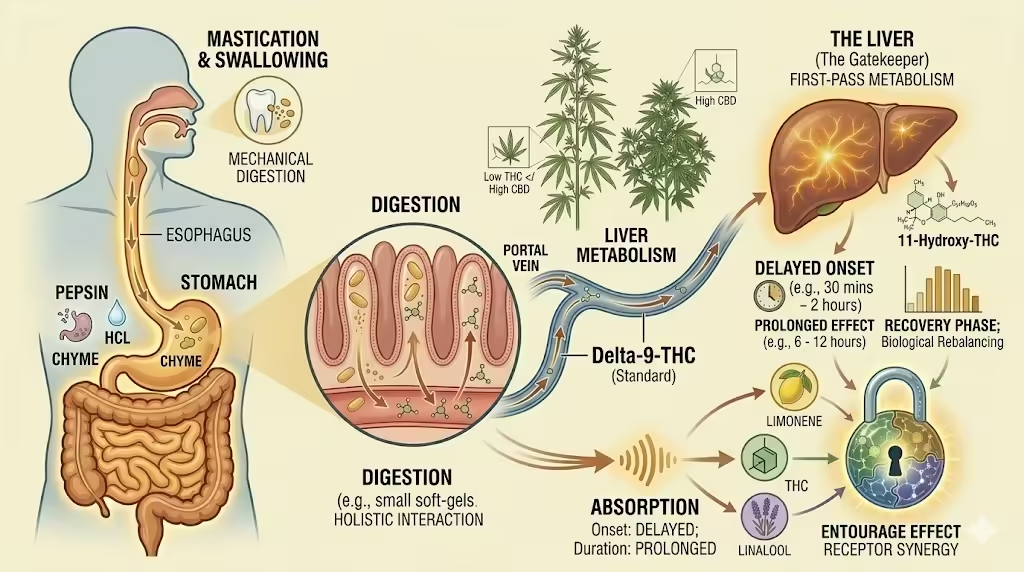
To understand the timing of an edible, one must first understand the route it takes through the body. When cannabis is smoked or vaped, cannabinoids enter the bloodstream through the lungs and reach the brain within seconds. In contrast, an edible must be processed like food.
The Step-by-Step Process:
Mastication and Swallowing: The edible enters the stomach.
Digestion: The stomach acids and enzymes break down the product.
Small Intestine: Cannabinoids are absorbed through the intestinal walls.
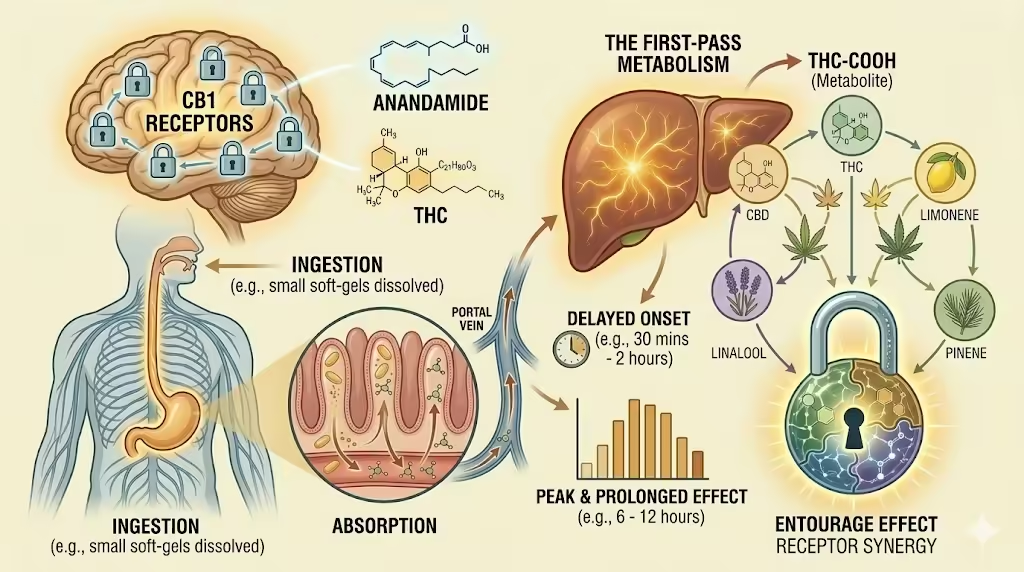
The Liver (The Gatekeeper): Once absorbed, the compounds travel via the portal vein to the liver. This is where the primary chemical transformation occurs before the cannabinoids enter the general circulatory system.
2. The Onset Window: 30 to 120 Minutes
For the average individual, the onset of an edible typically falls within a window of 30 to 90 minutes, though it can take as long as 2 hours for some.
The First 30 Minutes: Generally, no psychoactive effects are noted during this phase as the product is still being broken down in the stomach.
60 Minutes: Many individuals begin to feel the first subtle shifts in perception or physical sensation.
90 to 120 Minutes: This is often the point of “full onset,” where the initial effects have transitioned into a more stable state.
The Risk of Premature Redosing: Because the onset is delayed, a common error in literacy is the assumption that the product is “not working.” This leads to the consumption of a second dose before the first has been fully metabolized, resulting in an unexpectedly intense experience several hours later.
3. Why Potency Changes Over Time: 11-Hydroxy-THC
As the liver processes Delta-9-THC from the edible, it converts a significant portion into 11-Hydroxy-THC.
This metabolite is notably more potent and has a higher affinity for the CB1 receptors in the brain. Because this chemical conversion takes time, the “feeling” of an edible often evolves as the ratio of Delta-9 to 11-Hydroxy shifts in the bloodstream. This contributes to the “heavy” or “deep” sensation often associated with oral consumption compared to the “lighter” feeling of inhalation.
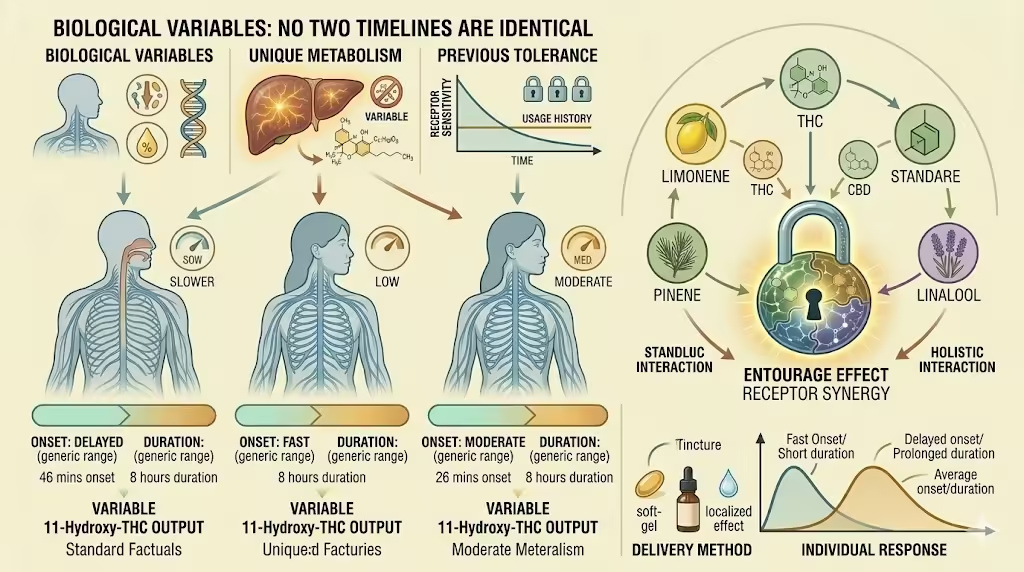
4. Biological Variables: No Two Timelines Are Identical
The question of “how long” is subjective and heavily influenced by an individual’s unique biology:
Metabolic Rate: Individuals with a high basal metabolic rate (BMR) may process edibles faster than those with a slower metabolism.
Liver Enzyme Function: The presence of specific enzymes, such as CYP2C9, determines how quickly the body converts and clears THC. Genetic variations mean some people are “fast metabolizers” while others are “slow metabolizers.”
Body Mass and Composition: Cannabinoids are fat-soluble. An individual’s body fat percentage can influence how compounds are stored and released over time.
5. Dietary Influence: The Stomach Environment
What an individual has eaten recently is perhaps the most significant external factor in onset timing.
Empty Stomach: Ingesting an edible on an empty stomach may lead to a faster onset (as quickly as 30 minutes), but it may also lead to a shorter duration and potential gastrointestinal sensitivity.
High-Fat Meals: Because cannabinoids bind to fats, consuming an edible alongside a meal rich in healthy fats (like avocado, nuts, or cheese) can actually increase the rate of absorption and the overall bioavailability of the THC.
Heavy Meals: A very large, protein-heavy meal may “clog” the digestive process, potentially delaying the onset of the edible to the 2-hour mark or beyond.
6. The “Peak” and Total Duration
Understanding “how long” also involves knowing how long the experience persists.
Stage
Duration from Ingestion
Onset
30 – 90 Minutes
Peak Effect
3 – 4 Hours
Total Duration
6 – 12 Hours
Residual Effects
Up to 24 Hours
The “Peak” is the point where the concentration of 11-Hydroxy-THC in the blood is at its highest. For most, this occurs around the 3-hour mark. Unlike smoking, where the peak is reached in minutes and fades quickly, edibles maintain a “plateau” that can last for several hours.
7. Product Formulation: Gummies vs. Beverages
In the 2026 market, not all edibles follow the same timeline.
Traditional Edibles (Gummies/Brownies): Must go through the full digestive tract. Onset: 60-90 minutes.
Nano-Emulsified Products (Beverages): Use technology to break THC into tiny particles that are water-soluble. These can be absorbed through the lining of the mouth and stomach. Onset: 15-30 minutes.
Sublinguals (Strips/Tinctures): Absorbed under the tongue. Onset: 15-45 minutes.
8. Conclusion: The Importance of the “Wait”
In the realm of cannabis education, patience is the primary safety mechanism for oral consumption. Understanding “how long do edibles take to work” is less about a fixed number on a clock and more about respecting the complex biological machinery of the human body. By acknowledging the delay and the role of the liver, an individual can approach cannabis with a higher degree of control and predictability.
Disclaimer
This content is for strictly educational and informational purposes only. It does not constitute medical or legal advice. Haze Buds does not encourage the use of cannabis where it is illegal. Edibles carry a significantly higher risk of over-consumption due to their delayed onset and prolonged duration. Always consult with a healthcare professional before introducing any new substance into your routine, and ensure you are in compliance with all local laws and regulations regarding cannabis.