
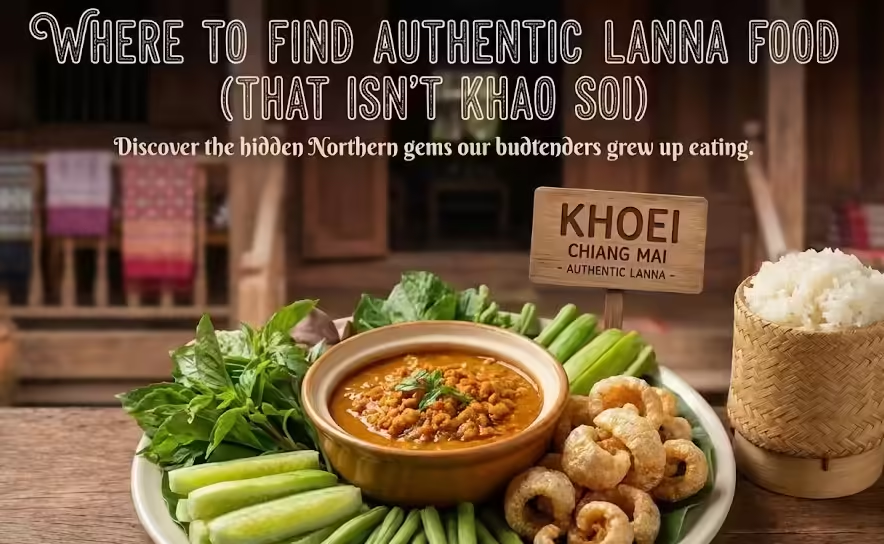
If you type “What to eat in Chiang Mai” into Google, you will get one answer, repeated a thousand times: Khao Soi.
Don’t get us wrong. We love Khao Soi. That rich, coconut curry soup with the crispy noodles on top is legendary for a reason. It is delicious. It is comforting. And after a session with a heavy Indica like OG Kush, it hits the soul like a warm hug.
But treating Northern Thai (Lanna) cuisine as only Khao Soi is like going to Italy and only eating Pizza. You are missing the depth. You are missing the funk. You are missing the bitterness, the herbal heat, and the complex textures that define the true palate of the North.
At Haze Buds, we consider ourselves connoisseurs. Not just of cannabis, but of the Chiang Mai lifestyle. And a huge part of that lifestyle is eating food that challenges and delights the taste buds. When our budtenders get off work, they don’t go for the sweetened Pad Thai sold on the tourist strip. They go for the real stuff. They go for the dishes that taste like their grandmother’s kitchen.
Finding “Authentic” Lanna food is harder than it looks. Many restaurants have adapted their recipes for the “Bangkok Palate” (sweeter, less spicy) or the “Western Palate” (no fermentation smell, mild heat). To find the real gold, you have to dig deeper.
Today, we are taking you on a culinary deep dive. We are going to introduce you to the dishes that define the North, focusing on a specific gem of a restaurant called Khoei Chiang Mai, and the one dish that will change your life: Ong Pu.
Before we sit down to eat, we need to calibrate your palate. Central Thai food (Bangkok) is often defined by a balance of Sweet, Sour, Salty, and Spicy. Lanna Food is different.
Bitter: Northern people love bitterness. It comes from herbs, specific vegetables, and bile (in soups).
Umami (Nua): This comes from fermentation. Fermented bean sheets (Tua Nao), fermented fish (Pla Ra), and shrimp paste.
Herbal Heat: It’s not just chili heat. It’s the numbing heat of Ma-Kwaen (a local prickly ash pepper similar to Sichuan pepper) and the aroma of lemongrass and galangal.
Texture: It is a sticky rice culture. Food is dry, meant to be dipped and scooped, not spooned like soup.
This flavor profile pairs exceptionally well with cannabis. Cannabis enhances the sensitivity to salt and umami. When you are high, the complex interplay of bitter herbs and savory fermentation in Lanna food becomes a high-definition sensory experience.
Location: Nimmanhaemin Road, Soi 5 The Vibe: Modern Rustic, Clean, Authentic Soul.
In the middle of the trendy Nimman district, surrounded by Japanese cafes and Korean BBQ, sits Khoei Chiang Mai. The name translates to “Chiang Mai’s Son-in-Law.” The concept is simple: recipes so good that a mother-in-law would pass them down to the family.
While many restaurants in Nimman are designed for “Instagram first, food second,” Khoei focuses on the recipes. The decor is lovely—woven bamboo, warm wood, yellow lights—but the star is the paste.
If you order one thing from this blog post, let it be this. Ong Pu (or Nam Prik Ong Pu) is the holy grail of Northern appetizers. It is made from the field crabs found in the rice paddies. The rich, yellow roe and fat from the crab are extracted, seasoned with eggs and mild spices, and then grilled back into the crab shell or served in a small bowl.
The Sensory Experience: Imagine the richest, creamiest uni (sea urchin) you have ever tasted. Now mix it with the savory depth of a salted egg yolk and the earthiness of a river crab. It is bright orange/yellow. It is thick. It is pure fat and umami.
How to Eat It: You take a ball of warm, steaming sticky rice. You dip it deep into the Ong Pu until the rice is coated in the yellow paste. You put it in your mouth. The richness coats your tongue immediately. It is savory, slightly sweet from the crab fat, and incredibly satisfying.
Why it’s a “Stoner” Dream: Cannabis craves fat. THC binds to fat. And the texture of sticky rice combined with the creaminess of the crab paste provides a “mouthfeel” that is unparalleled. It cures the “dry mouth” sensation by coating the palate.
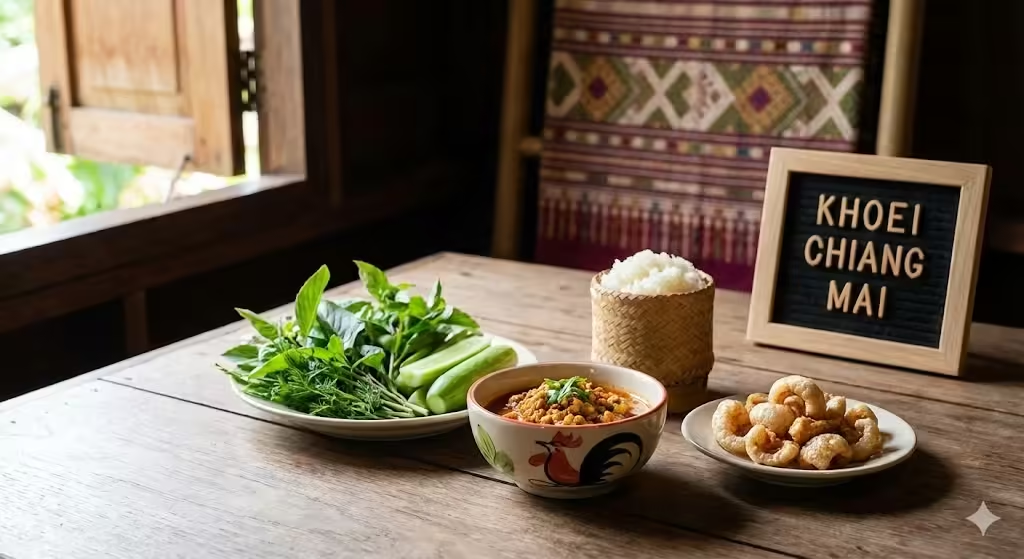
Once you have finished the Ong Pu (you might order two), here is what else needs to be on your table at Khoei Chiang Mai to complete the Lanna feast.
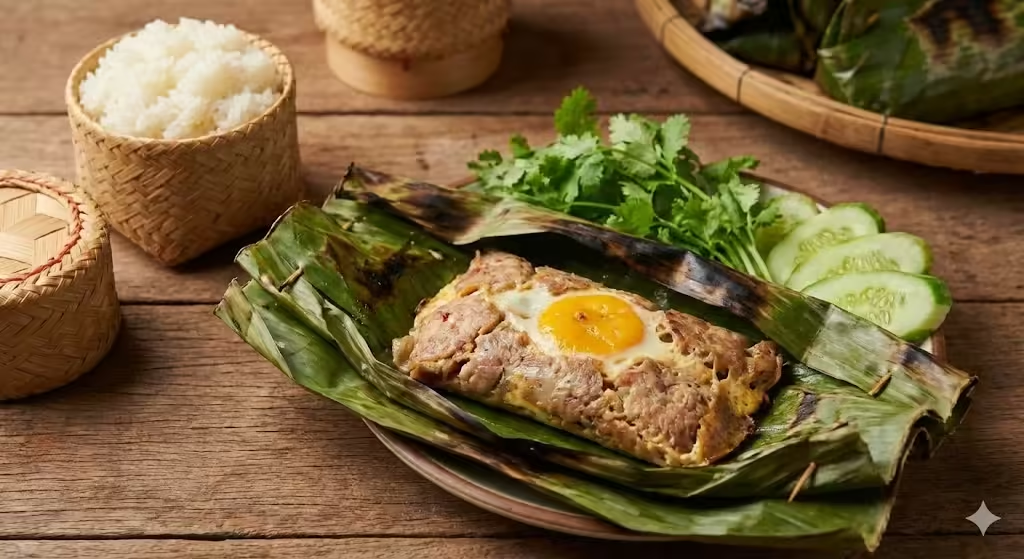
Jin Som (or Naem) is sour fermented pork sausage. In this dish, it is mixed with egg, wrapped in a banana leaf, and grilled over charcoal.
The Taste: Sour, salty, and smoky. The texture is soft, almost like a savory custard because of the egg.
The Pairing: The sourness cuts through the richness of the crab paste.
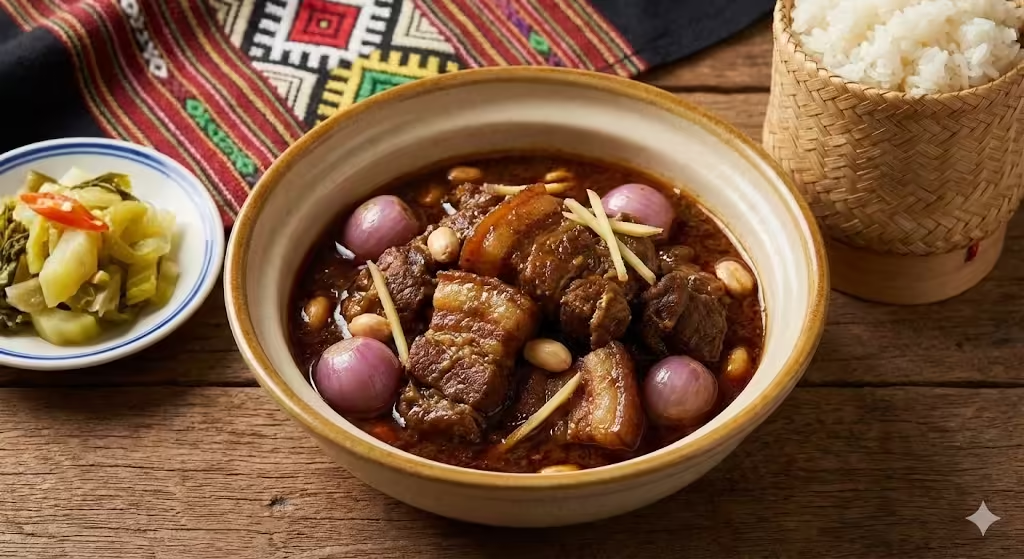
You might have seen this before, but real Hang Lay is unique. It is a pork belly curry with no coconut milk. It uses tamarind, ginger, and pickled garlic.
The Taste: Sweet, sour, and heavy on the ginger. The pork belly should be so tender it falls apart with a spoon.
The Texture: It is thick and oily (in a good way).
Do not confuse this with the “Larb” you find in Bangkok (the sour, limey one). Northern Larb uses no lime. It is dark, brown, and dry. It is made with a specific spice blend called Prik Larb which contains dried chilies, long pepper, star anise, and the magical Ma-Kwaen.
The Taste: Earthy, spicy, and slightly numbing. It is bitter from the herbs and sometimes bile (if you order the bitter version). It is sophisticated.
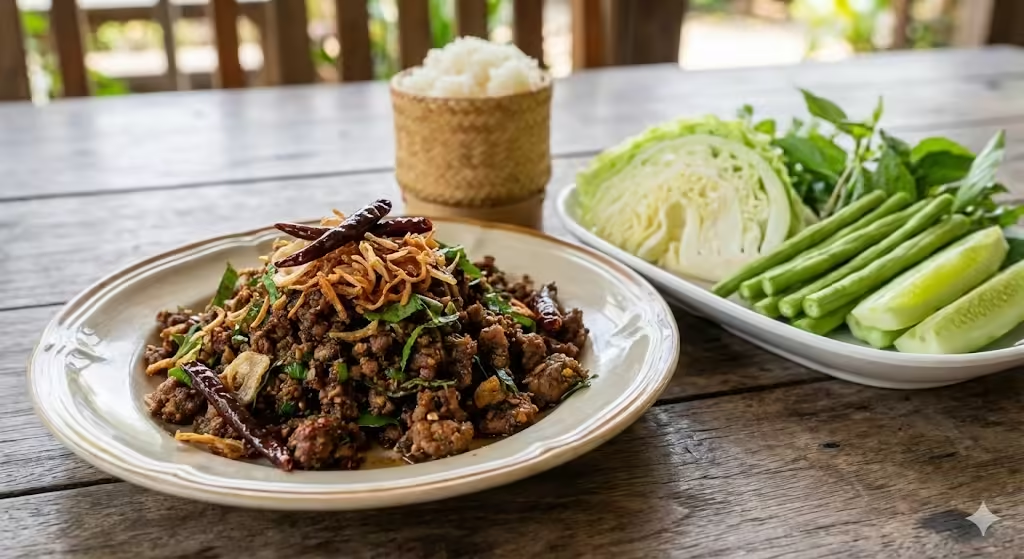
Now, how do we elevate this meal? You are eating food that is heavy on herbs, spice, and richness. You need strains that compliment these profiles, not fight them. Based on the current Haze Buds inventory, here are the perfect pairings.
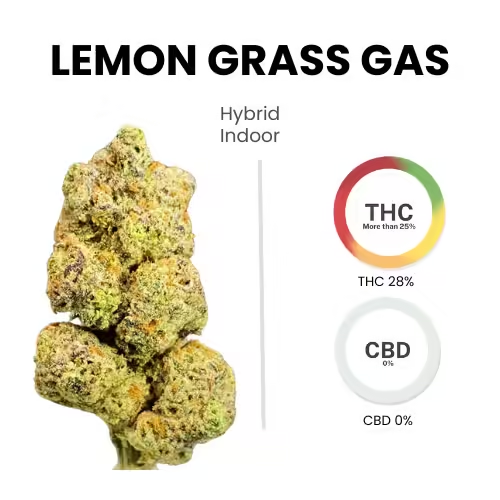
Type: Hybrid (THC 20%)
Why: The name says it all. Northern food is dominated by lemongrass aromas. Smoking Lemon Grass Gas before the meal prepares your olfactory system. The citrus/herbal notes in the smoke will bridge perfectly with the flavors of the Sai Oua sausage and the Gaeng Hang Lay. It’s a harmonious pairing.
Type: Hybrid (THC 20%)
Why: Lanna food is spicy. Zpizey Dozidoz has a terpene profile that is peppery and spicy (likely Caryophyllene dominant). It matches the heat of the Larb Kua. The hybrid effect ensures you are relaxed enough to eat a lot, but not so sleepy that you fall face-first into your curry.
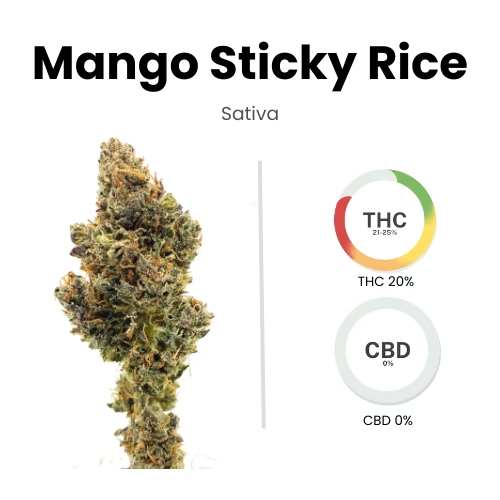
Type: Sativa (THC 20%)
Why: After a heavy, savory, fatty meal of crab paste and pork belly, you need a palate cleanser. You need something bright and sweet. Mango Sticky Rice is the literal strain equivalent of Thailand’s favorite dessert. It smells of sweet fruit and coconut. As a Sativa, it will wake you up from the “food coma” that is inevitable after a Lanna feast, allowing you to waddle home happily.

We mentioned earlier that real food is rare. Here is why. Tourism destroys nuance. When a restaurant wants to appeal to everyone, they add sugar. Sugar masks bitterness. Sugar masks the funk of fermentation. If you go to a generic “Thai Food” restaurant near the Night Bazaar, your Khao Soi will probably taste like dessert. Your Larb will taste like lime juice and sugar.
Places like Khoei Chiang Mai (and others like Huen Muan Jai or Han Thueng Chiang Mai) resist this. They keep the funk. They are not afraid to serve something that smells strong. At Haze Buds, we respect that integrity. It’s the same way we respect a strain like Super Boof or Dirty Bird. We don’t want generic weed; we want character. We want the funk.
To fully enjoy this experience, you have to eat correctly.
The Sticky Rice Ball: Do not use a fork to eat sticky rice. Wash your hands. Take a small amount of rice. Knead it in your fingers until it is a tight ball.
The Scoop: Use the rice ball as your spoon. Dip it into the Ong Pu. Scoop up the Larb. The tactile sensation of the warm rice in your hand connects you to the food.
The Veggie Basket: Every table comes with a basket of raw vegetables (cabbage, long beans, cucumber, herbs). Eat these! They are the palate cleansers. When the chili gets too hot, bite a cucumber.
We challenge you to step out of your comfort zone. Tonight, skip the Pad Thai. Skip the Pizza.
Come to Haze Buds.
Pick up a gram of Lemon Grass Gas.
Head to Nimman Soi 5.
Order the Ong Pu.
When you dip that sticky rice into the rich, yellow crab fat and take the first bite, you will understand why we love this city. You will taste the history. You will taste the landscape.
And if you get the “munchies” halfway through? Well, that’s just an excuse to order the Jin Som.
“Discover the hidden Northern gems our budtenders grew up eating.”