The Haze Family Name: History, Aroma Traits, and Menu Confusion
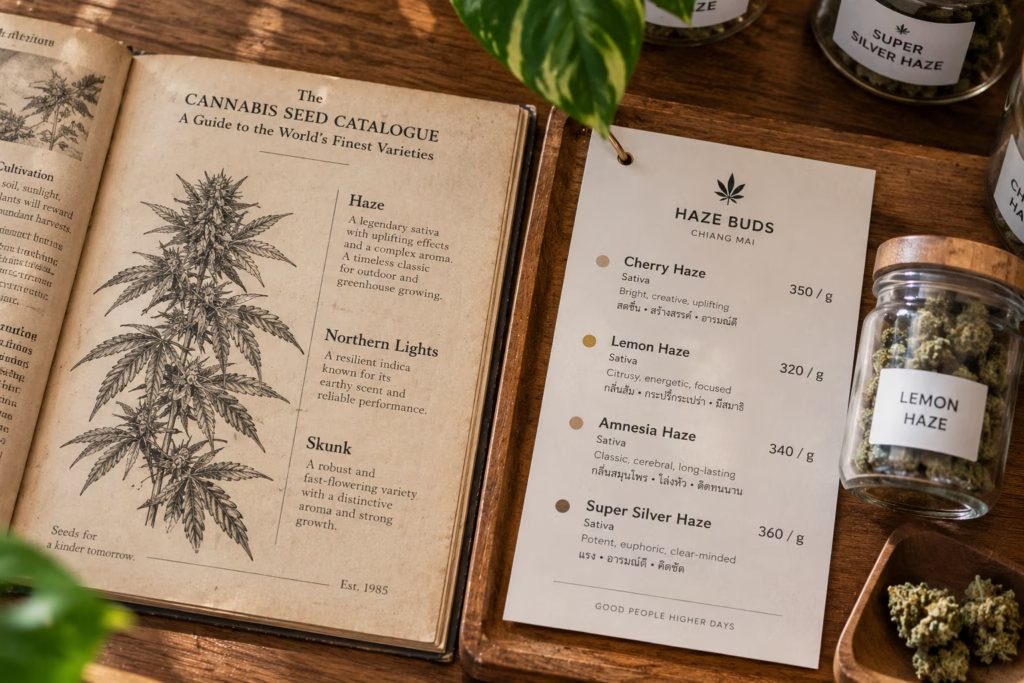
“Haze” shows up on Thai menus the way “chardonnay” shows up on wine lists. It looks like a single product. It is usually a family name.
That is already confusing when the shop you are standing in is called Haze Buds. This article separates those two uses, then explains what the cultivar family historically pointed to, what aroma people expect, and why two jars with “Haze” in the title can still be different batches.
Important disclaimer: Educational strain-family background only. Not medical advice. Effects vary. Flower and higher-THC products in Thailand require a valid Thai-issued PT33, age 20+, and a licensed dispensary. Use only in private permitted spaces. Never drive after consumption.
Two different uses of the word
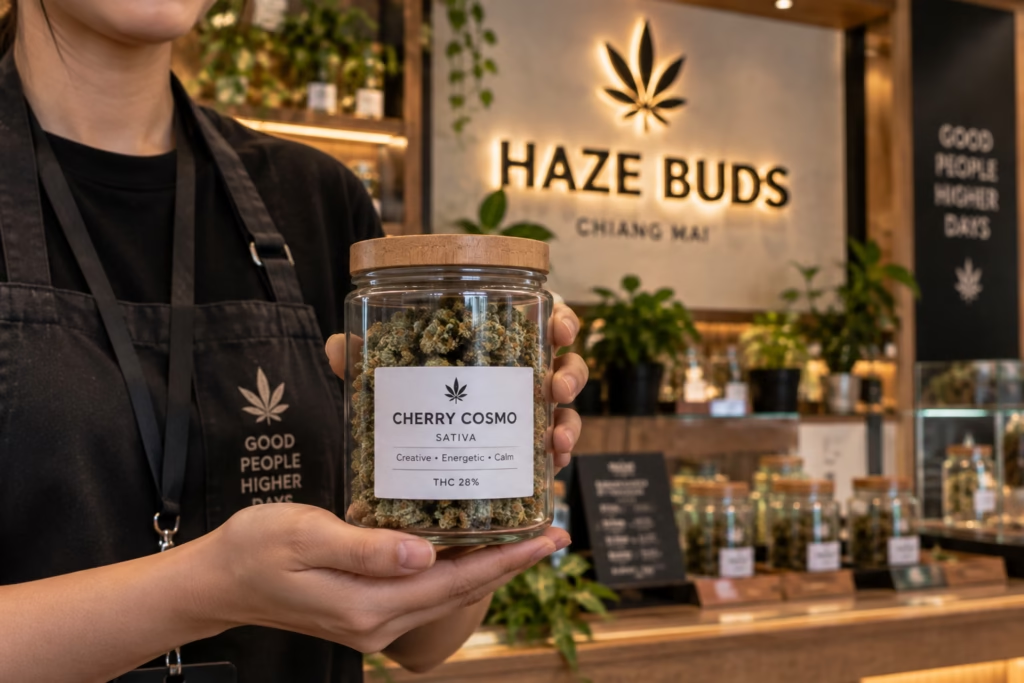
Haze Buds is the licensed Chiang Mai dispensary. The name is the shop.
Haze on a jar is a cultivar-family tag that breeders have attached to plants for decades. It does not mean the flower was grown by this shop, and it does not mean every Haze-labeled jar will smell the same.
If you only remember one line from this piece, remember that split.
Where the family name came from
The original Haze story is Californian. In the 1970s, growers in the Santa Cruz area worked with imported sativa-leaning lines often described as Mexican, Colombian, Thai, and South Indian in various combinations. The plant that stuck to the name was tall, long-flowering, and sharp in the nose.
From there the name traveled the way popular cultivar names travel:
European seed companies amplified it in the 1990s
Cup-winning crosses such as Super Silver Haze and later Amnesia Haze taught the market that “Haze” could be a prefix
Modern menus now use it as a flavor of ancestry, even when the cross is several generations away from those early plants
History here is useful context. It is not a certificate. A jar printed in Chiang Mai in 2026 is a batch with a test, not a time machine to Santa Cruz.
Thai landrace plants and “Thai stick” lore sit in a related conversation — old tropical sativas — but they are not automatically the same as a Haze-family hybrid on today’s shelf. Do not collapse those stories into one sticker.
What “Haze” usually points to on a menu
When breeders keep the word, they are usually signaling a sativa-leaning family: longer structure in the plant, a brighter or sharper aroma, and a label that is often THC-forward.
“Usually” is doing a lot of work.
After fifty years of crossing, you will also see:
Haze hybrids with dessert names
Haze hybrids with fuel notes
Short, dense indoor flower that would surprise anyone expecting a lanky tropical spear
So “Haze” is a filing cabinet, not a passport photo. Read the rest of the label.
Aroma traits people actually mean
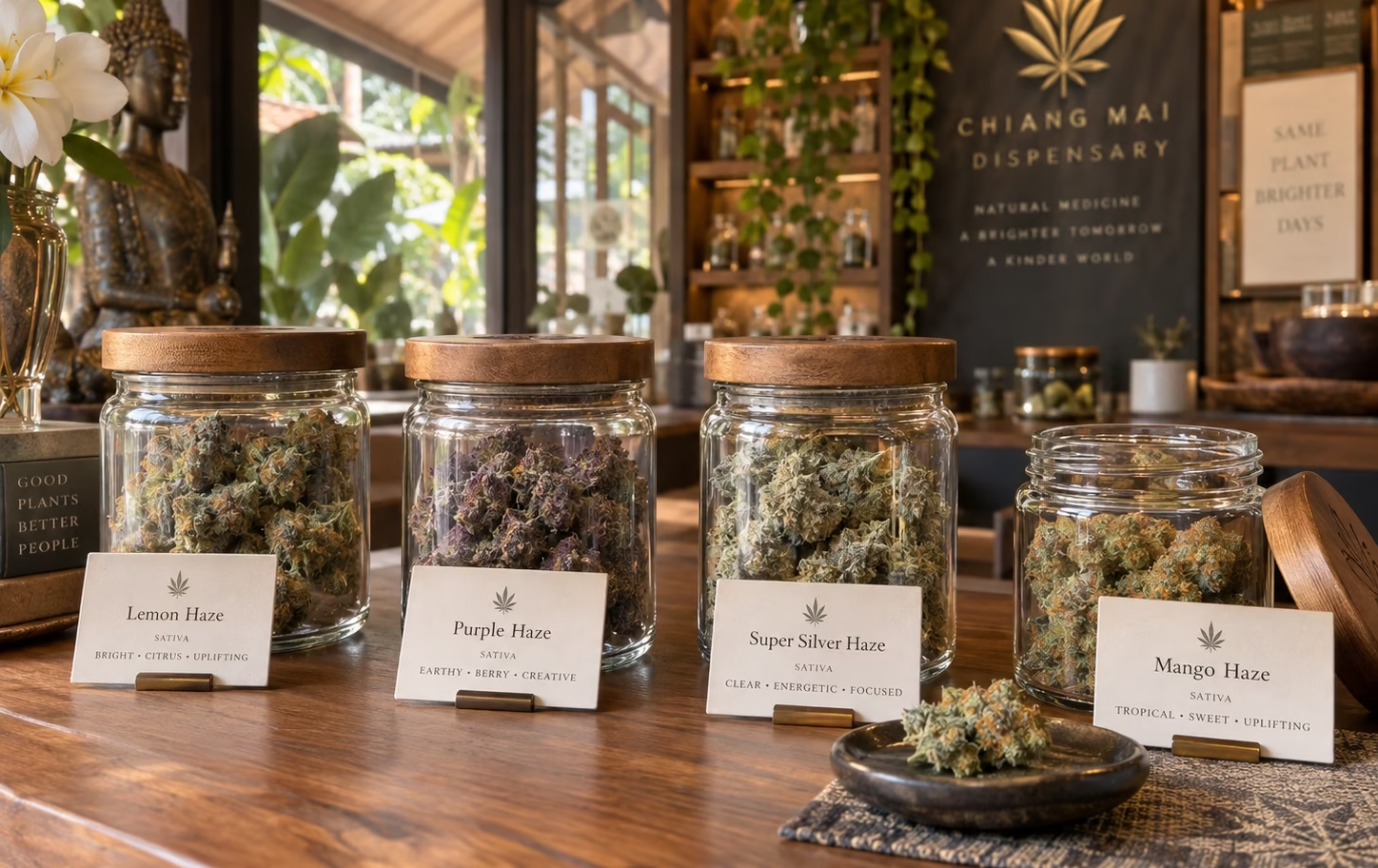
Ask ten regulars what Haze smells like and you will get some mix of:
Incense or wood
Citrus peel
Spice
A sharp, lingering top note people call “piney” or “electric”
That cluster is the stereotype. It is not a lab panel.
Haze-family jars can also pick up sweetness from the other parent. If the second word on the menu is Cookie, Cake, or Fruit, believe that word as much as you believe Haze.
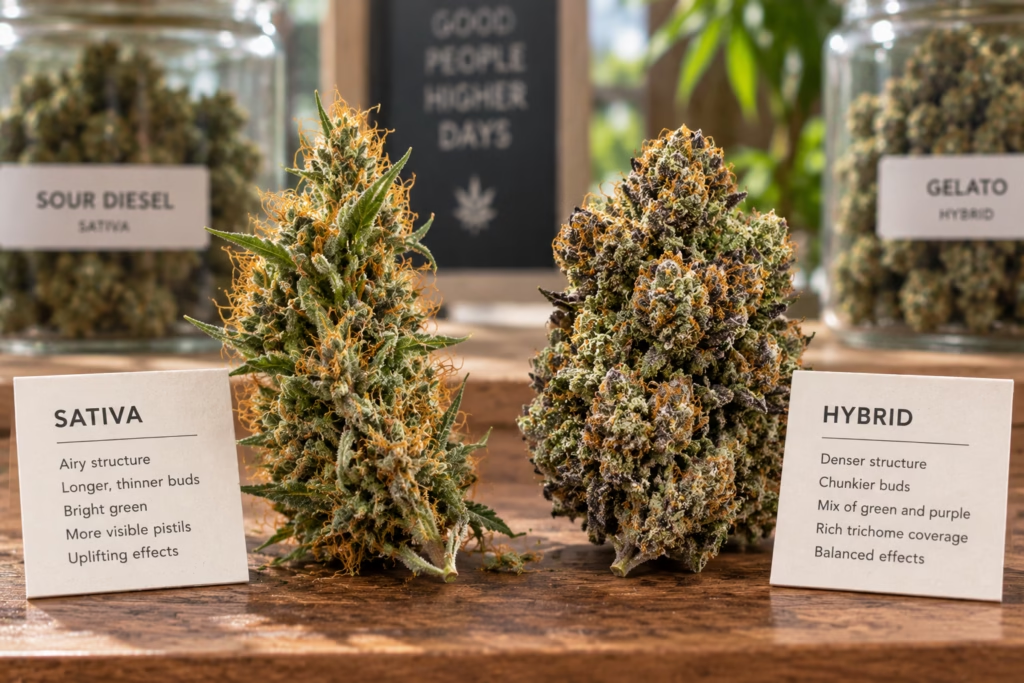
At the counter, use the same three checks we use on any new drop: printed THC/CBD, structure in the jar, aroma off the lid. If the card says Haze and the jar smells like vanilla dough, the dough wins the description.
We already publish terpene guides. This article will not reprint them. The only aroma job here is to stop you from expecting one official Haze perfume.
Why Thai menus get messy
Three things collide on a Chiang Mai board:
Imported naming — Californian or European seed names printed on local batches
House nicknames — shops shorten long names to fit a tag
Batch drift — the same name, new harvest, new numbers
Add tourists who tasted “a Haze” five years ago in another country, and the conversation becomes “this isn’t the same.” Correct. It is probably not the same plant, farm, test, or year.
Menu confusion is normal. It is not a failure of the word. It is what happens when a family name is asked to behave like a barcode.
How to read a Haze-labeled jar at Haze Buds
A practical script:
Ignore the shop name for a second. You are reading the jar.
Look at THC and CBD. Most classic Haze-family items will be THC-forward, but check anyway.
Smell the batch, not the legend.
Ask “which farm and pack date?” if two Haze names sit side by side.
Buy for the days you have left, inside your PT33 quantity.
Staff at Old Town, Chiang Mai Gate, and Sridonchai should be able to say whether this Haze-labeled jar is sharp and citrusy, incense-like, or already pulled toward a dessert parent. If they can only repeat the name, ask to compare two jars.
The shop is called Haze Buds because that is the brand. It is not a promise that every flower in the case is a Haze-family cultivar.
Conclusion
Haze is an old family name from California breeding, stretched across decades of crosses. On a Thai menu it signals ancestry and a common aroma stereotype — incense, citrus, spice — not a single official plant.
Read the batch. Smell the jar. Leave the mythology on the card.
When you want that comparison done in person, bring your passport to Haze Buds and ask for the label under the name, not the name alone.
FAQ
Is Haze one strain? No. It is a family name used on many related and loosely related cultivars.
Is Haze Buds flower always from the Haze family? No. The shop name is the shop name. The menu carries multiple families.
Does Haze always mean sativa? Historically the family is sativa-leaning. Modern crosses can land anywhere. Trust the specific jar.
Why does this Haze taste different from one I had abroad? Different farm, different cross, different test, different year. Names travel farther than plants.
Do I need a PT33 to buy a Haze-labeled jar? If it is flower or another higher-THC product, yes — a Thai-issued PT33, age 20+, licensed shop. The family name does not change the legal path.