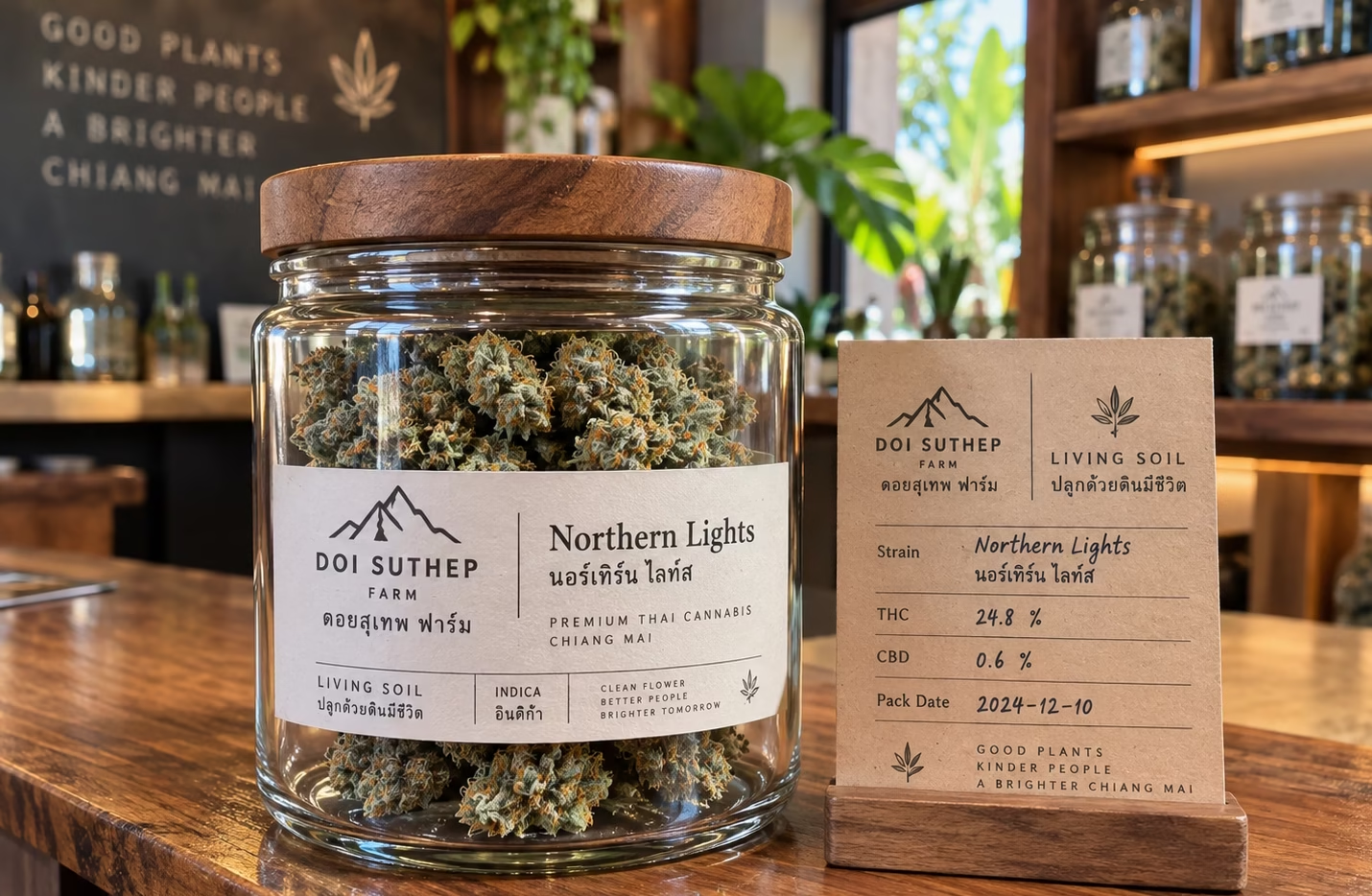
Most Thai menus lead with two letters: THC and CBD. Some jars and bottles now add two more: CBG and CBN.
Those extras are called minor cannabinoids because they usually appear in smaller amounts than THC or CBD. They are still just compounds listed on a test. They are not secret ingredients and they are not a diagnosis.
This guide stays on the print. It does not tell you what CBG or CBN will do for a medical condition.
Important disclaimer: Educational only. Not medical or legal advice. Do not read cannabinoid letters as a cure, treatment, or prevention claim. Flower and higher-THC products in Thailand require a valid Thai-issued PT33, age 20+, and a licensed dispensary. Use only in private permitted spaces. Never drive after consumption.
What “minor” means on a Thai label
“Minor” is a quantity word, not a quality word.
A typical flower test is dominated by THC, or by THC and CBD together. Anything else that shows up in the cannabinoid panel — CBG, CBN, CBC, THCV — is “minor” because the lab measured less of it.
If a label does not list CBG or CBN, that does not mean the plant contained zero. It often means the producer only printed the two headline figures. Absence on a sticker is not a full chemical story.
CBG in one paragraph
CBG stands for cannabigerol.
In plant chemistry it is often described as an early building-block cannabinoid. On a finished product label it is simply another column: a percentage on flower, or milligrams on an oil or capsule.
When you see CBG printed, read it as “this batch was tested for CBG, and here is the number.” Do not translate it into energy, focus, or comfort. Those are marketing sentences. They do not belong on a Haze Buds education page.
CBN in one paragraph
CBN stands for cannabinol.
It often appears when THC has been present in the plant or in stored flower over time. On a label it is, again, a measured amount — % or mg — not a bedtime instruction.
Some packages lean on sleepy language around CBN. Treat that language as advertising. The only factual line is the number next to the letters.
Old flower can show more CBN on a test than a fresher batch of the same name. That is one reason pack dates still matter more than a CBN story.
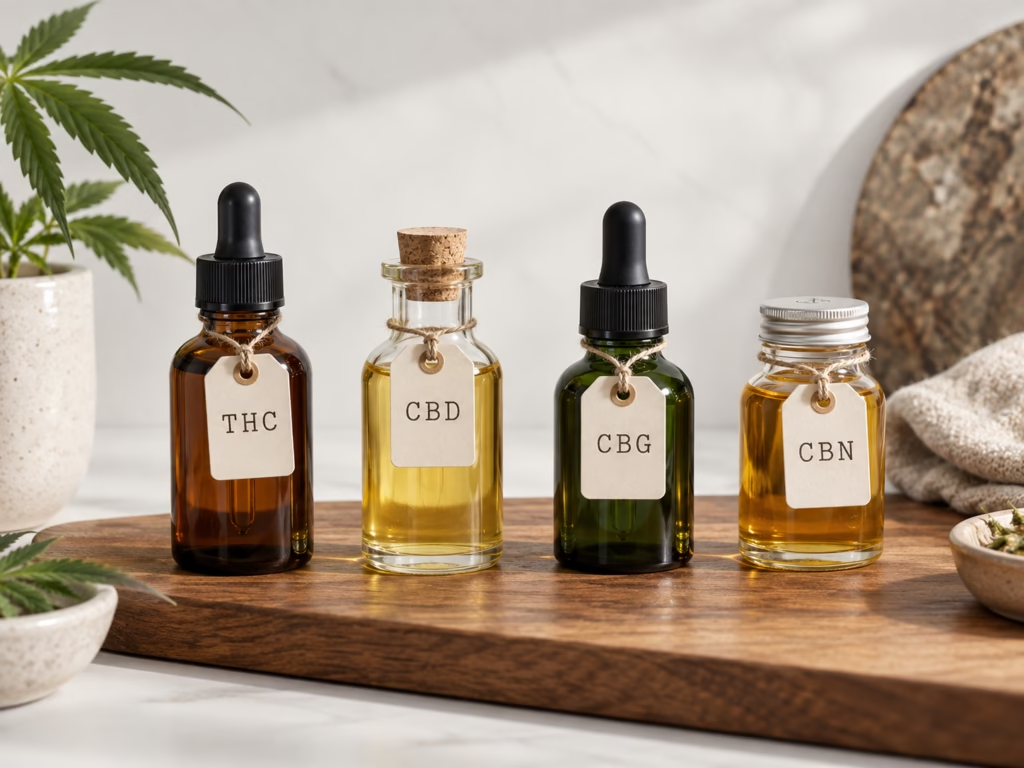
How the numbers are usually printed
Expect one of these layouts:
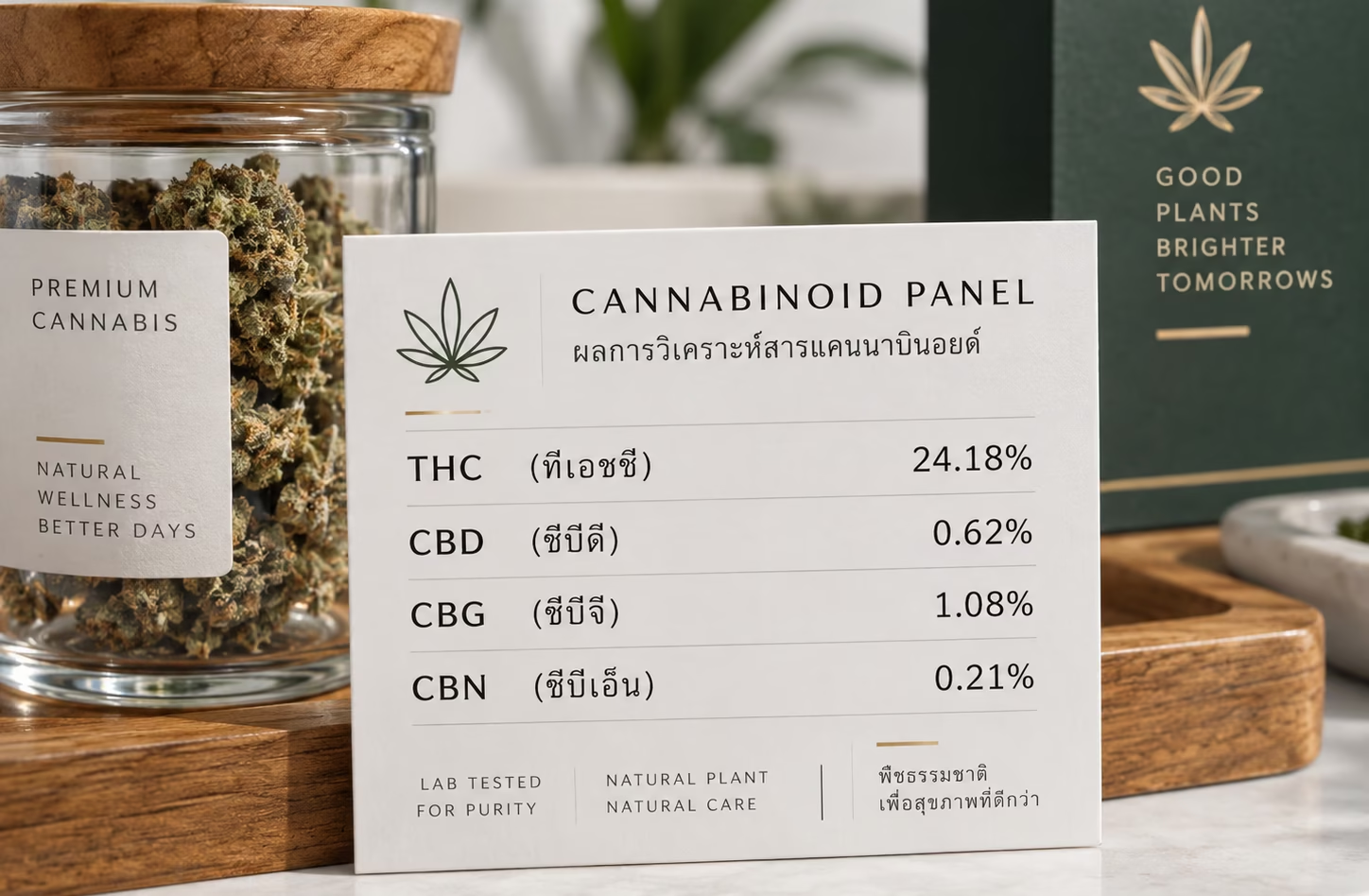
- A row under THC/CBD: CBG 0.8% / CBN 0.2%
- A milligram line on an oil: CBG 10 mg / ml
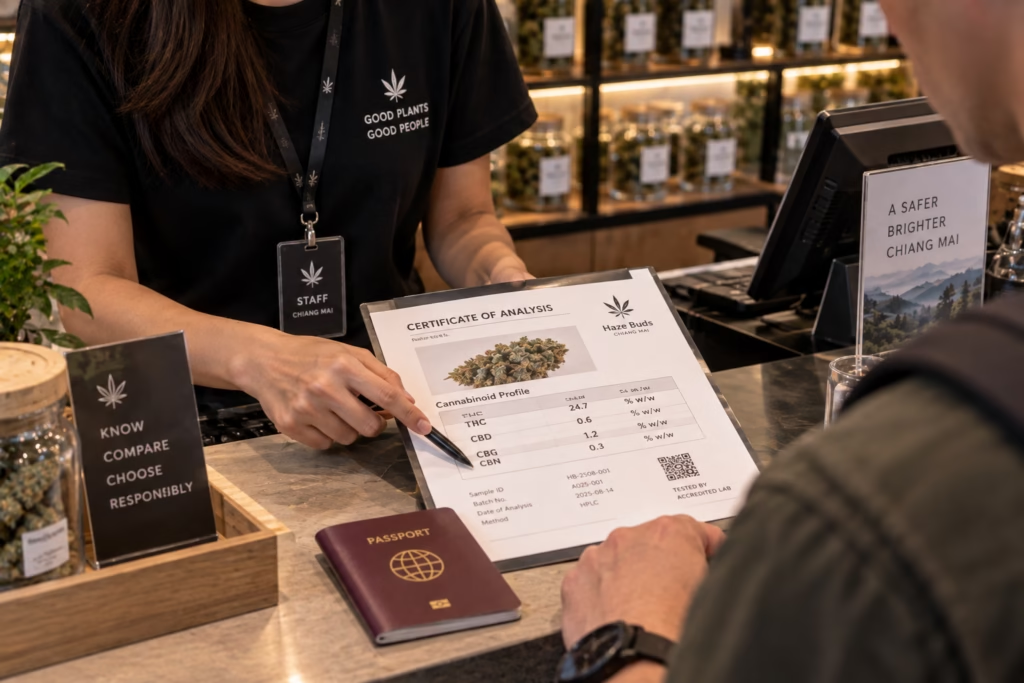
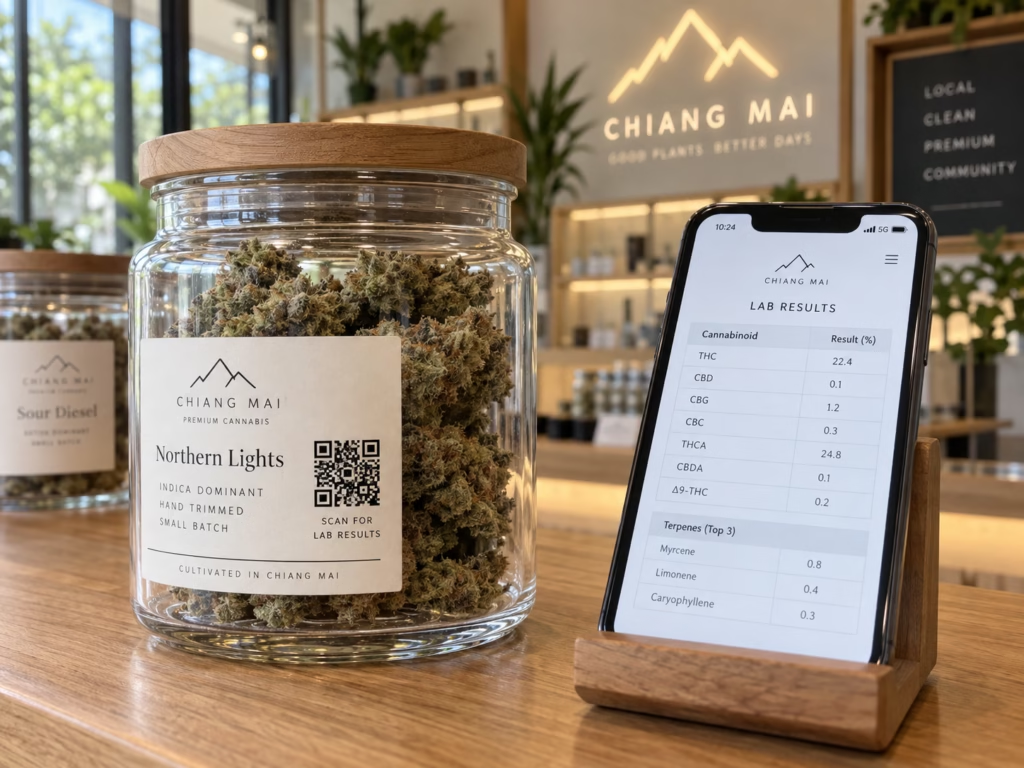
- A “full panel” or QR code that opens the lab report
Units are not interchangeable. Percent on flower is not the same as milligrams in a bottle. If staff say “it’s high in CBG,” ask “high compared with what unit?”
If the only CBG/CBN mention is in a brand slogan and not in a tested figure, there is no number to read.
What these lines do not tell you
A CBG or CBN figure does not tell you:
- That the product treats sleep, pain, mood, or inflammation
- That the batch is safer
- That you should take more
- That a foreign wellness blog’s dose chart applies in Thailand
- That you can skip a PT33 because the extra letters look “mild”
Minor cannabinoids also do not replace THC and CBD as the first two facts on the jar. If those two are missing, the extra letters are decoration.
How to read CBG or CBN next to THC and CBD
Use the same order every time:
- What format is this — flower, oil, gummy?
- What are the THC and CBD numbers?
- Is this product in the PT33 column or the low-THC CBD column?
- Only then: is CBG or CBN actually quantified?
- Pack or test date
A flower jar that reads THC 22% / CBD 0% / CBG 1% is still a THC-forward jar with a small CBG line. It is not a “CBG product” in any useful sense.
A bottle that lists CBD in the hundreds of milligrams and CBN in a small extra amount is still a CBD-led bottle with a footnote.
Asking staff without collecting health promises
Useful questions:
- “Is CBG or CBN on the lab report, or only on the marketing card?”
- “Is that figure a percent or milligrams?”
- “How old is the batch?”
- “Does this item need a PT33?”
Less useful questions:
- “Which one is for sleep?”
- “Which one is for pain?”
- “Can CBN replace my medication?”
Haze Buds staff should answer the first list and decline the second. If a clerk starts prescribing, you are no longer in an education conversation.
The three Chiang Mai branches — Old Town, Chiang Mai Gate, and Sridonchai — use the same label-first habit. Bring your passport. For flower and higher-THC items, complete the practitioner step before anyone talks you through minor columns.
Conclusion
CBG and CBN are extra letters on some Thai tests. They name compounds that showed up in smaller amounts than THC or CBD. That is the entire reliable story.
Read them after the headline numbers. Ignore health slogans attached to them. Match the product to the legal path it sits on, then take it to a private space.
When you want a label walked through in person, ask Haze Buds to show the panel — not a promise.
FAQ
If CBG or CBN isn’t printed, is the product incomplete?
Not necessarily. Many producers only print THC and CBD. You can ask whether a fuller report exists for that batch.
Is CBN just “old THC”?
CBN can increase as THC ages, but a printed CBN figure is still only a lab number. Do not use it as a freshness score by itself. Check the pack date.
Are products with CBG or CBN legal without a PT33?
It depends on THC content and product type, not on the minor letters. Flower and higher-THC items need a Thai PT33. Some low-THC CBD formats follow different rules. Ask which shelf you are on.
Should I choose the jar with the most extra cannabinoids?
No. More letters are not a ranking. Start with format, THC/CBD ratio, date, and your prescribed amount.
Can Haze Buds tell me how CBG or CBN will affect me?
We can show you what was measured. We cannot tell you how your body will respond, and we will not make medical claims.