

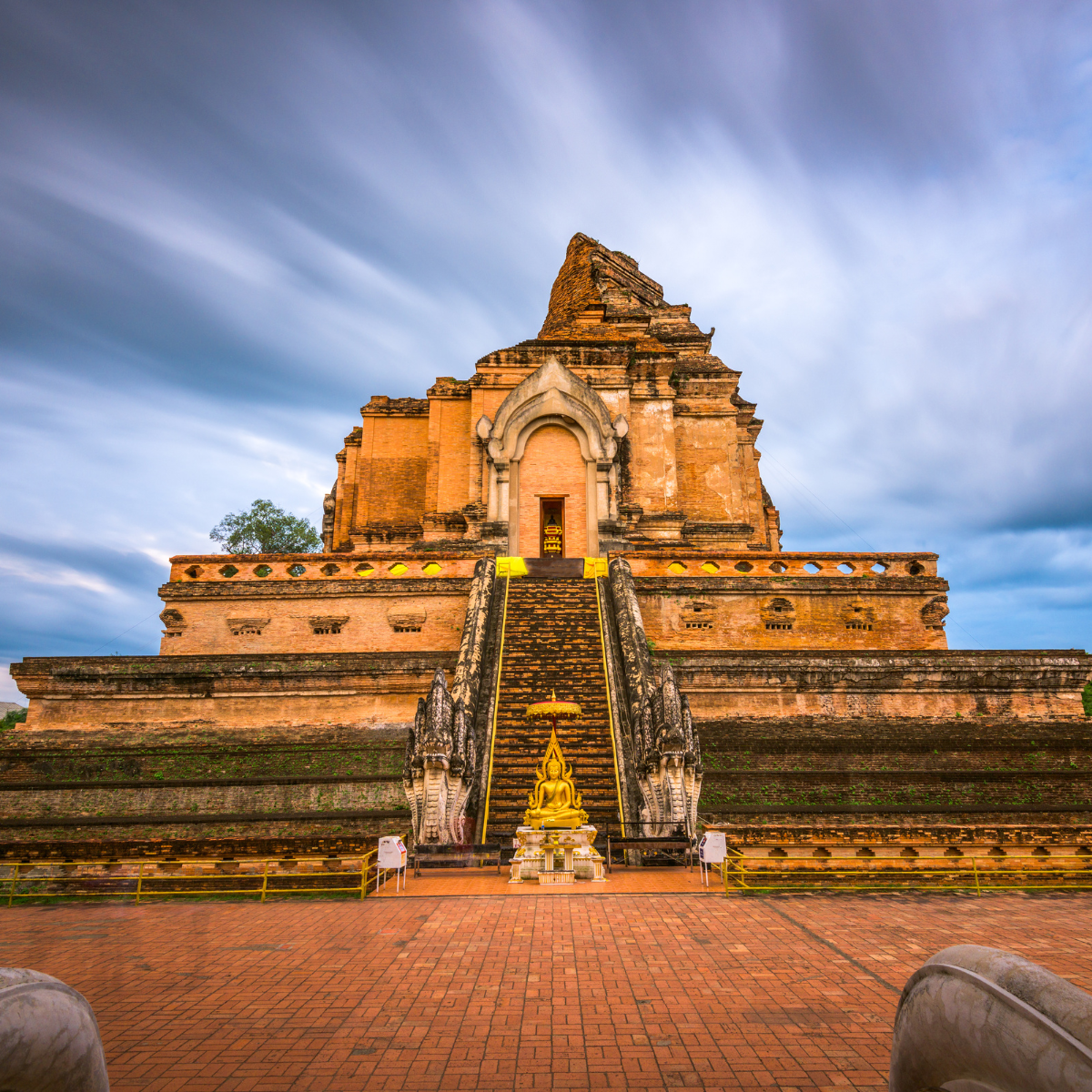
Chiang Mai’s Old City is a living museum. It is a square mile of history surrounded by a crumbling brick wall and a moat that has stood for over 700 years. Inside this square, time behaves differently. It slows down. The traffic noise of the outer ring road fades into a background hum, replaced by the sound of temple bells, chanting monks, and the rustling of Bodhi tree leaves.
At Haze Buds, we often see customers who treat the Old City like a checklist. They take a Grab to the gate, snap a photo, and leave. But to truly understand the soul of Lanna (Northern Thai) culture, you have to walk. You have to feel the pavement under your feet, smell the frangipani flowers, and get lost in the small alleyways (sois) that Google Maps sometimes forgets.
Walking is the best way to explore, especially after a visit to our dispensary. When your mind is opened and your senses are heightened by a quality Sativa or a balanced Hybrid, the intricate details of Thai architecture—the gold leaf, the mosaic mirrors, the Naga serpents—become absolutely mesmerizing.
We have curated a specific 30-minute culture walk that starts right near our zone in the Old City. This route hits the massive, famous landmarks you must see, but it also weaves into the quiet, hidden temples that most tourists walk right past.
So, grab a pre-roll for the walk (to be enjoyed before you enter the sacred grounds—we’ll get to etiquette in a moment), put your phone on “Do Not Disturb,” and let’s go for a walk to visit the 5 temples near Haze Buds.
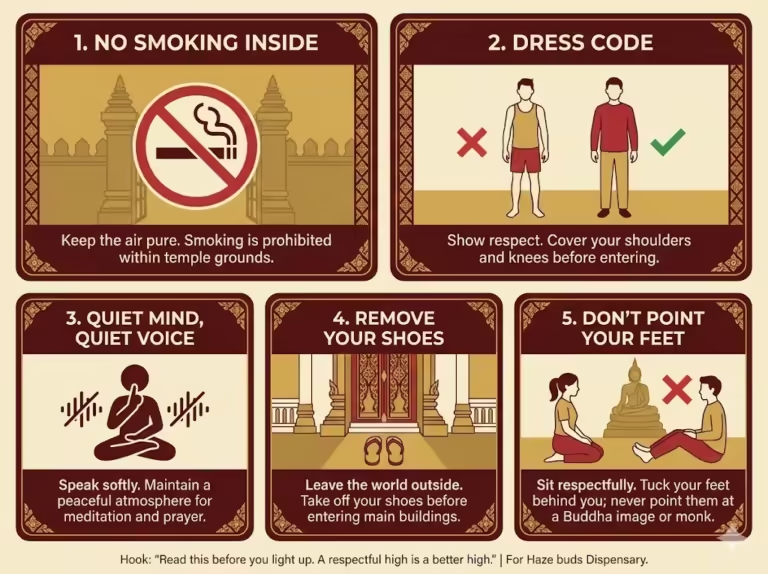
Before we step out the door, we need to have a serious talk about respect. Thai temples (Wats) are not just tourist attractions; they are active places of worship. They are the spiritual community centers of the neighborhoods.
Exploring these spaces while “enhanced” can be a beautiful, spiritual experience, but it requires a high level of self-awareness.
No Smoking Inside: This is the golden rule. Never, ever smoke cannabis (or cigarettes) inside the temple walls. It is illegal and deeply disrespectful. Partake before you start your walk or in designated smoking areas outside the temple gates.
Dress Code: Cover your shoulders and your knees. This applies to everyone. We know it’s hot, but carrying a sarong or wearing light linen pants is a small price to pay for entry.
Quiet Mind, Quiet Voice: Cannabis can sometimes make us giggle or talk loudly. If you feel like you are too “up,” take a minute to breathe before entering a main prayer hall (Viharn). The vibe inside is silence and contemplation. Match that energy.
Remove Your Shoes: Always take off your shoes before entering any building.
Don’t Point Your Feet: When sitting in front of a Buddha image, sit with your legs tucked back (mermaid style). Never point the soles of your feet at the Buddha or a monk.
Now that we are respectful travelers, let’s start the route.
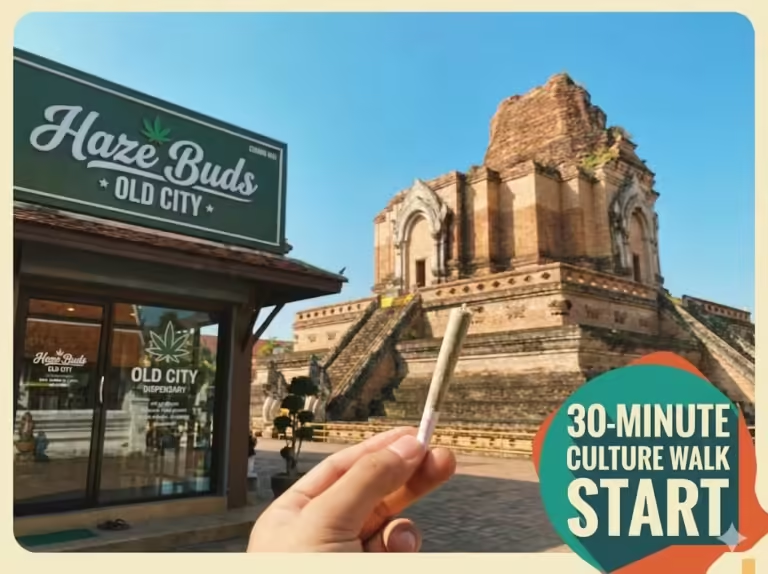
Walking time from start: 5-10 Minutes (depending on your pace) The Vibe: Massive, Ancient, Power.
We start with the heavyweight champion. Wat Chedi Luang is impossible to miss. In a city of gold and glitter, this temple is a mountain of brick and stone.
Built in the 14th century, this chedi (stupa) was once the tallest structure in ancient Chiang Mai. It used to house the Emerald Buddha (which is now in Bangkok). However, in 1545, a massive earthquake shook the city, causing the top of the spire to collapse.
This is where visiting after a Haze Buds session becomes profound. Stand at the base of the ruin. Look up. The sheer scale of it is overwhelming.
The Nagas: Look at the staircase leading up the ruin. The Naga serpents guarding the stairs are considered some of the best masterpieces of Lanna art. Notice the scales. The way the light hits the stone makes them look like they are slithering.
The Elephants: Halfway up the structure, you will see elephant statues emerging from the brick. Some are original restorations; some are new. Try to spot the difference.
The Damage: Because it is a ruin, you can see the layers of bricks. You can see the scars of history. It feels heavy and permanent.
Walk clockwise around the stupa (this is the traditional way to show respect). There is a massive Dipterocarp tree near the entrance known as the “City Pillar” guardian. Legend says that if this tree falls, Chiang Mai will fall. It’s a great spot to stand in the shade and just feel the history.
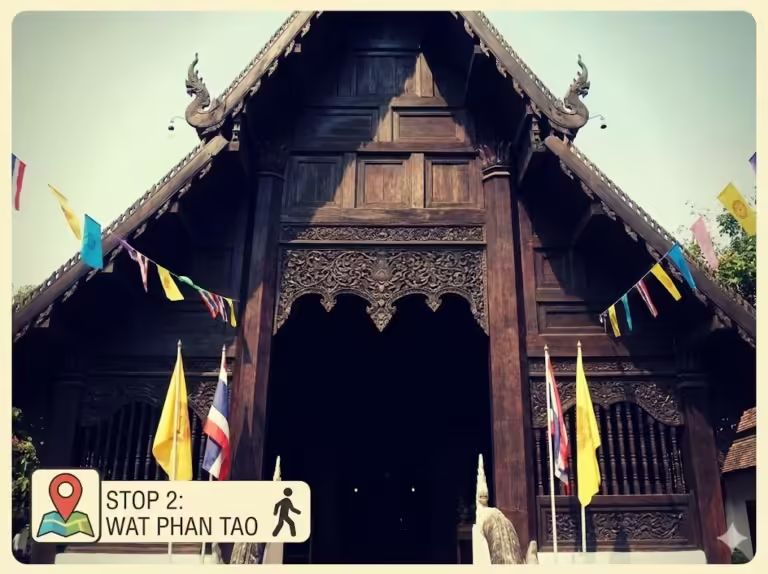
Walking time from Chedi Luang: 1 Minute (Right next door) The Vibe: Dark, Warm, Intimate.
Right next to the massive brick mountain of Chedi Luang sits a humble, darker cousin: Wat Phan Tao.
Most tourists snap a photo of the big ruin and leave, completely missing this gem. Wat Phan Tao is one of the few remaining wooden temples in Chiang Mai. It was originally a royal palace building (a “Ho Kham” or Gilded Hall) for the ruler of Chiang Mai before it was dismantled and reassembled as a monastery.
The contrast here is striking. You go from the sun-baked brick of Chedi Luang to the cool, dark teak wood of Phan Tao.
The Color Palette: The wood is unpainted teak, aged to a dark, rich brown. It is set against gold leaf decorations. If you are appreciating visuals, the way the gold pops against the dark wood is stunning.
The Mosaic: Look above the entrance. There is a peacock shaped over a sleeping dog, decorated with colored glass mosaic. The peacock represents the sun/kings, and the dog represents the zodiac year of the former King. The glass glitters in the afternoon sun.
The Silence: Because wood absorbs sound, the interior of the main hall feels incredibly quiet and insulated. It smells of old timber and incense. It is a perfect place to sit for 5 minutes and meditate.
Walking time from Phan Tao: 3 Minutes The Vibe: Quiet, Hidden, Auspicious.
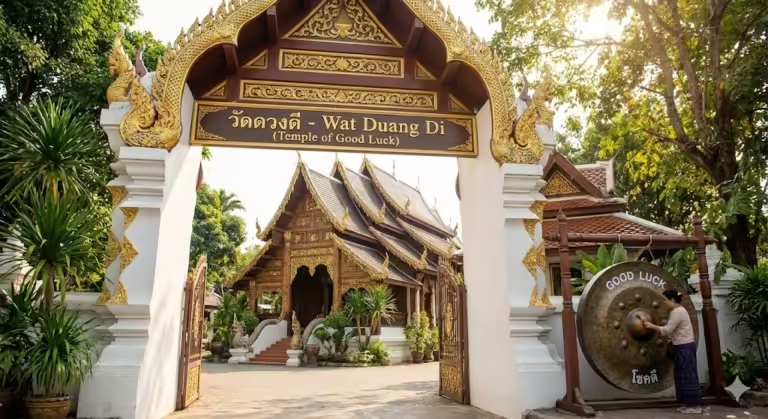
Exit Wat Phan Tao, turn left, and walk north along the road. You will pass the 3 Kings Monument (stop for a look if you want, but keep moving for the temples). Tucked away slightly off the main drag is Wat Duang Di.
“Duang Di” literally translates to “Good Luck” or “Good Fortune.”
This is one of those “Hidden Wats” we promised. You won’t find tour buses here. You will likely be the only person in the courtyard.
This temple is small, but the details are exquisite.
The Ho Trai (Library): The star of this temple is the scripture library. It is a small building with stucco relief carvings of flowers and mythical animals. The artistry is incredibly delicate.
The Atmosphere: This is a “local” temple. You might see a cat sleeping on the stairs. You might hear a monk sweeping leaves. It feels like a neighborhood home.
The Reflection: Since the name means Good Luck, take a moment here to set an intention. Whether you believe in superstition or not, standing in a quiet courtyard named “Good Fortune” while enjoying the gentle buzz of a peaceful afternoon is a positive way to reset your mindset.
Walking time from Duang Di: 2 Minutes The Vibe: Black, Mysterious, Central.
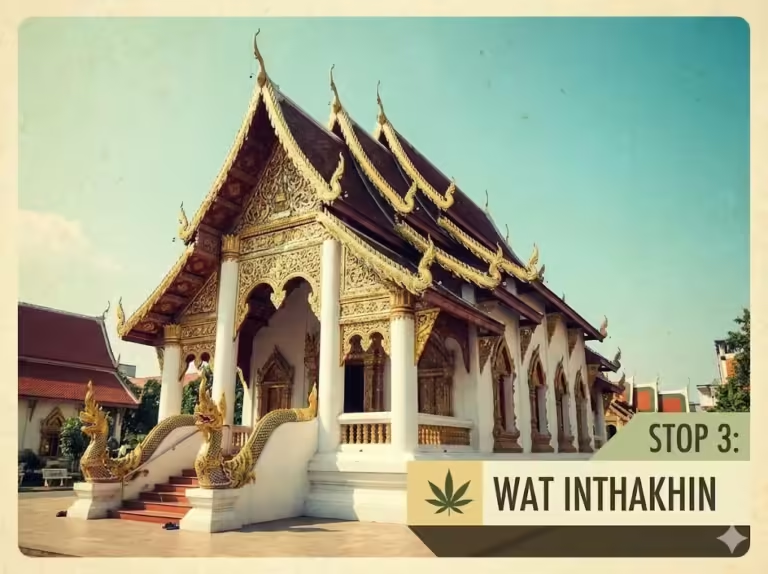
Walk towards the 3 Kings Monument square. On the south side of the square, you will see two very distinct, small temples. One of them is Wat Inthakhin Sadue Muang.
“Sadue Muang” means “Navel of the City” (or bellybutton). In Lanna belief, a city is like a living body, and it has a center point where the energy is concentrated. This temple marks that spot.
This temple looks different from everything else.
The Black Viharn: The main building is made of dark wood and often appears almost black, with very steep, multi-tiered roofs. It looks ancient and slightly mysterious.
The Compactness: It is tiny. You can’t really go “inside” in the same way as the others; you view it more from the exterior.
The Energy: Because it is the “Navel,” locals treat this spot with high reverence. It’s right next to the busy square, yet it feels anchored and solid.
The Brick Guardian: Next to the black wooden building is an octagonal brick stupa. It’s overgrown with a bit of moss and looks like a mini-fortress.
This is a great spot to observe the contrast between the ancient spiritual center and the modern skateboarders who often hang out in the 3 Kings square in the evening. Old meets New.
Walking time from Inthakhin: 3 Minutes The Vibe: Overgrown, Secret, Brick.
Note: Do not confuse this with “Wat Umong” the tunnel temple outside the city. This is the one inside the Old City.
To find this, you have to go into the alleyways behind the 3 Kings Monument. This is the ultimate “Hidden Gem.” Even expats who have lived here for years sometimes don’t know this place exists.
Wat Umong Mahathera Chan is mostly a ruin, similar to Chedi Luang but on a micro-scale. It sits in an open, grassy lot hidden behind shophouses.
This is the end of our walk, and it is the most peaceful spot.
The Cheoy (Stupa): The brick chedi here is crumbling and covered in vegetation. It looks like something out of Indiana Jones.
The Contrast: You are in the dead center of the city, yet it is silent. The grass is usually overgrown. It feels like a secret garden.
The Lanna Lanterns: Often, there are colorful Lanna lanterns hanging from the trees here, swaying in the wind.
The Comedown: This is the perfect place to sit on a bench and just “be.” If the effects of your pre-roll are starting to settle into a mellow body relaxation, this environment supports that perfectly. There is no visual clutter here. Just brick, grass, and sky.
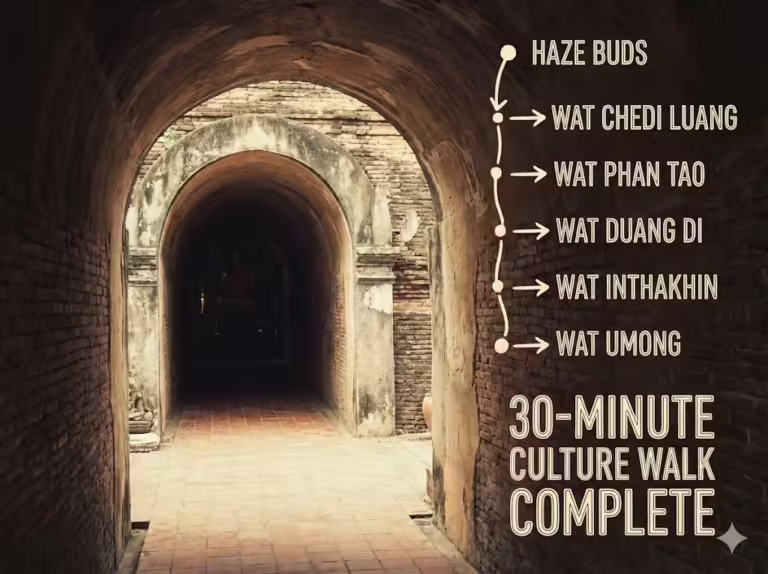
From Wat Umong Mahathera Chan, you are deep in the maze of the Old City. To get back to Haze Buds or to find food, you just need to drift south.
As you walk back, notice how your perception has changed. Before the walk, the temples might have just looked like “buildings.” Now, after slowing down, paying attention, and perhaps using cannabis as a tool for focus, you see the details. You see the difference between the teak and the brick. You feel the weight of 700 years of history.
This is why we love Chiang Mai. It rewards those who walk. It rewards those who look closely.
Best Time to Go: 4:00 PM – 6:00 PM. Why: The sun is lower, so the gold on the temples glows warmer. The heat is dying down. And at 6:00 PM, many temples do their evening chanting. Hearing the monks chant in Pali while the sun sets over Chedi Luang is an audio-visual experience that transcends language.
Since this is a “Culture Walk,” you don’t want to be asleep. You want to be awake, engaged, and appreciative of art.
We Recommend: A Sativa-dominant Hybrid like Blue Dream or Jack Herer.
Why: These strains provide a “cerebral” high. They enhance colors (making the gold leaf pop) and encourage curiosity. They give you the energy to walk but the headspace to stop and stare at a Naga statue for five minutes without getting bored.
Avoid: Heavy Indicas. You don’t want to feel like your legs are made of concrete when you are trying to explore.
Come by Haze Buds before your walk, tell our budtender you are doing the “Temple Loop,” and we will set you up with the perfect pairing.
If you want to read more you can click this button to read more.



Copyright © 2023 Haze Buds | Powered by C&R Group
